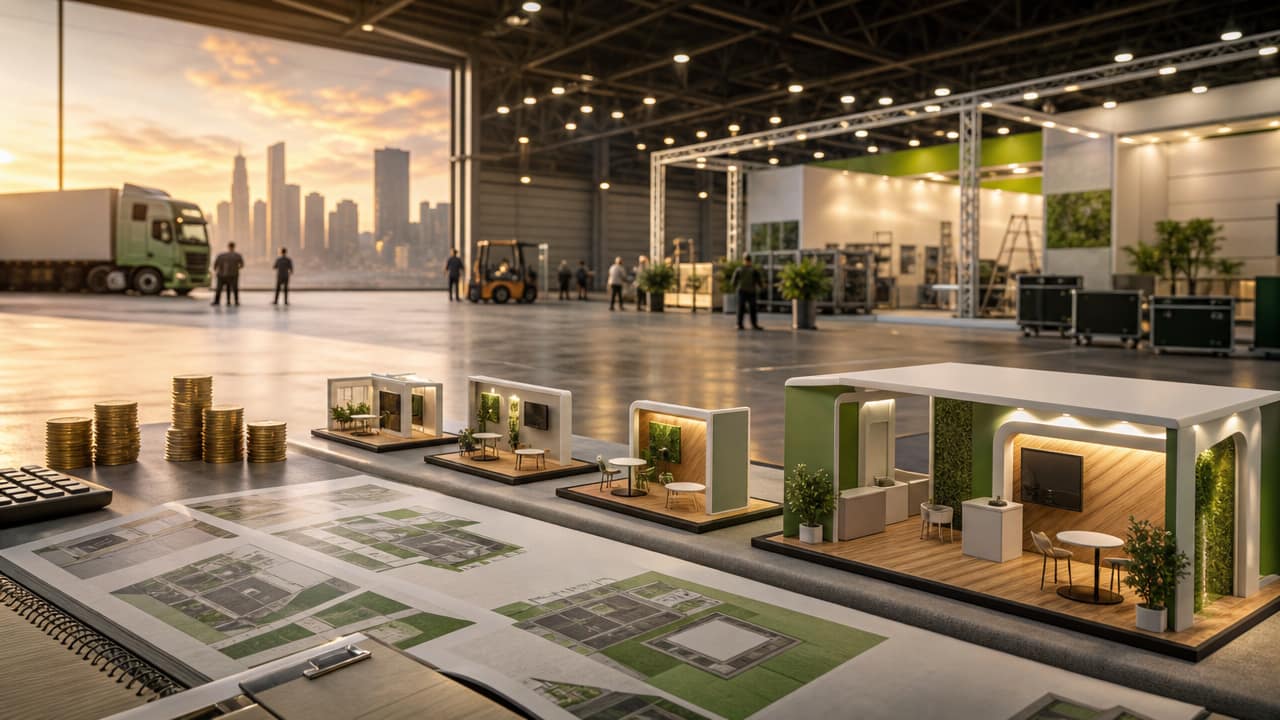



Understanding Exhibition Stand Costs is essential for Australian exhibitors aiming to maximise impact without overspending. Stand size is one of the strongest cost drivers, as most organisers charge per square metre and apply different rates for shell schemes and custom builds. By unpacking how stand size, inclusions and design affect your trade show budget, you can make informed decisions that support your marketing and sales objectives.
Exhibition stand pricing typically starts with a base rate per square metre, which increases as you move from basic packages to custom designs. Smaller footprints, such as 3×3 metres, naturally reduce hire fees but can limit product displays and meeting space. Larger or island sites improve visibility yet require more extensive builds, higher power loads and additional staffing. A clear stand size cost comparison helps you see where extra space genuinely supports your goals, rather than simply inflating your invoice.
While space hire is the starting point, larger stands also multiply other expenses including flooring, structures, graphics and furniture. A bigger footprint may demand more complex lighting, audio-visual equipment and storage areas, adding to your trade show stand cost breakdown. Cleaning, waste removal and after-hours access can also rise with stand size. To stay in control, align your stand dimensions with realistic visitor numbers and the type of engagements you plan, such as quick scans, product demos or seated meetings.

Space-only options generally provide just the floor area and essential venue services, leaving all walls, structures and branding to you. Shell scheme packages, by contrast, usually include standard walls, fascia signage, basic lighting and limited power, simplifying budgeting for exhibition space. However, upgrades such as feature lighting, high-quality flooring or digital screens quickly add up. When requesting exhibition stand quotes, confirm whether cleaning, storage, internet and rigging are included, optional or compulsory extras as this can significantly affect your final invoice.
A well-planned smaller stand can deliver stronger results than an oversized space with no clear strategy. Begin your trade show stand budget planning by defining target lead volumes, desired conversion rates and potential revenue per client. From there, assess how many staff you need, how visitors will move through the stand and where demonstrations or meetings will occur. This approach supports cost-effective exhibition stand sizes that still meet brand and engagement requirements, rather than defaulting to the largest footprint available.
To interpret and compare proposals, focus on interpreting exhibition stand quotations line by line rather than only viewing the total. Ask suppliers to itemise labour, materials, furniture, graphics and services, which makes comparing exhibition stand estimates more accurate. Where appropriate, consider negotiating exhibition stand pricing by adjusting finishes, reducing complexity or phasing upgrades over multiple events. By understanding how different stand sizes influence direct and indirect Exhibition Stand Costs, you will be better placed to choose a layout that suits both your objectives and financial constraints. If you are unsure where to start, speak with an experienced exhibition specialist who can guide you through options and help you plan your next event with confidence.
Input your search keywords and press Enter.