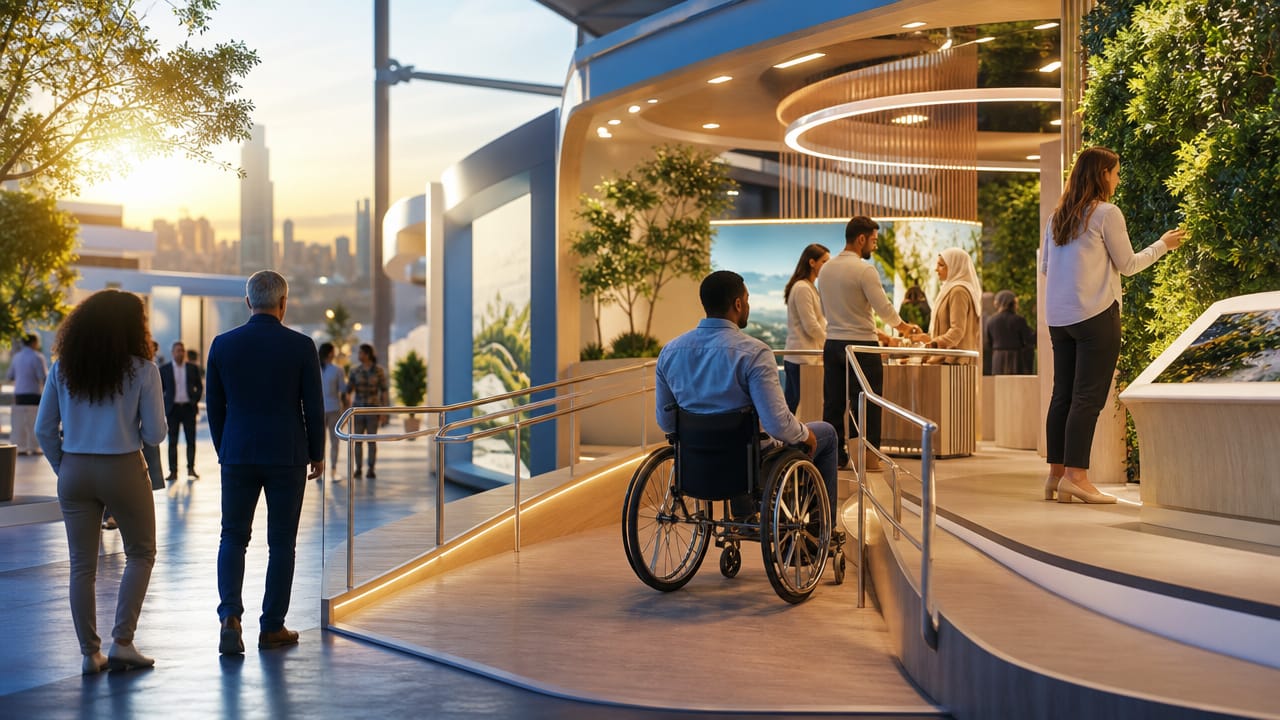



Designing for diverse audiences is now a core expectation for trade shows and events across Australia. A genuinely inclusive stand layout goes beyond aesthetics to support comfort, dignity, and independence for every visitor. When Exhibition Stand Design considers accessibility and cultural inclusion from the outset, brands build stronger engagement, better conversations, and more memorable experiences.
An inclusive stand layout recognises that visitors arrive with different physical, sensory, and cultural needs. With almost one in five Australians living with disability, accessible exhibition booth layouts are a mainstream requirement, not a niche feature. A stand that is easy to enter, move through, and understand encourages people to stay longer and interact more deeply with staff and content. This leads to improved lead quality, stronger brand trust, and a more professional presence.
Start with clear, step-free entry points, firm and even flooring, and circulation paths wide enough for wheelchairs and prams. Counters, product plinths, and touchscreens should be reachable from both seated and standing positions, supporting dignified interaction for everyone. Good lighting, reduced glare, and high-contrast signage make navigation easier for visitors with low vision. Avoid flashing or strobe effects and excessively loud audio, which can be difficult for people with sensory sensitivities.

Information should be offered in multiple formats, including concise text, diagrams, and short captioned videos. This supports visitors who process information differently and helps those navigating a busy environment or speaking English as an additional language. Consider multisensory exhibition stand concepts that use touch, sound, and visuals without overwhelming the space. Providing a quieter consultation zone is particularly helpful for visitors with hearing aids, autism, or anxiety, enabling more focused conversation.
Culturally responsive stands use imagery, case studies, and examples that reflect Australia’s diversity in age, gender, background, and family structure. Inclusive branding on stands avoids stereotypes and signals that all visitors are welcome and respected. Brief staff on disability etiquette, plain language explanations, and how to guide people through interactive zones. This training supports visitor-friendly stand flow, ensuring that nobody feels rushed, ignored, or singled out when asking for assistance.
To embed inclusivity, review your exhibition booth design early in the planning process rather than adding accessibility right before the event. Walk through barrier-free stand design ideas from the perspective of a wheelchair user, an older adult, or a parent managing a pram and bags. Note where circulation tightens, where messaging becomes confusing, or where seating is missing. These practical inclusive stand layout tips help you refine custom exhibition stands so that inclusive trade show displays become a repeatable standard.
Before finalising your Exhibition Stand Design, test the layout with colleagues who have different needs and gather honest feedback on comfort and clarity. Use their insights to develop accessible exhibition booth layouts and inclusive custom stand design options for future events. As you explore new exhibition stand ideas, document what works well so your team can refine its approach each time. If you are planning your next event presence, consider seeking expert guidance to review your concepts and ensure your stand is truly inclusive, effective, and ready to welcome every visitor.
Input your search keywords and press Enter.