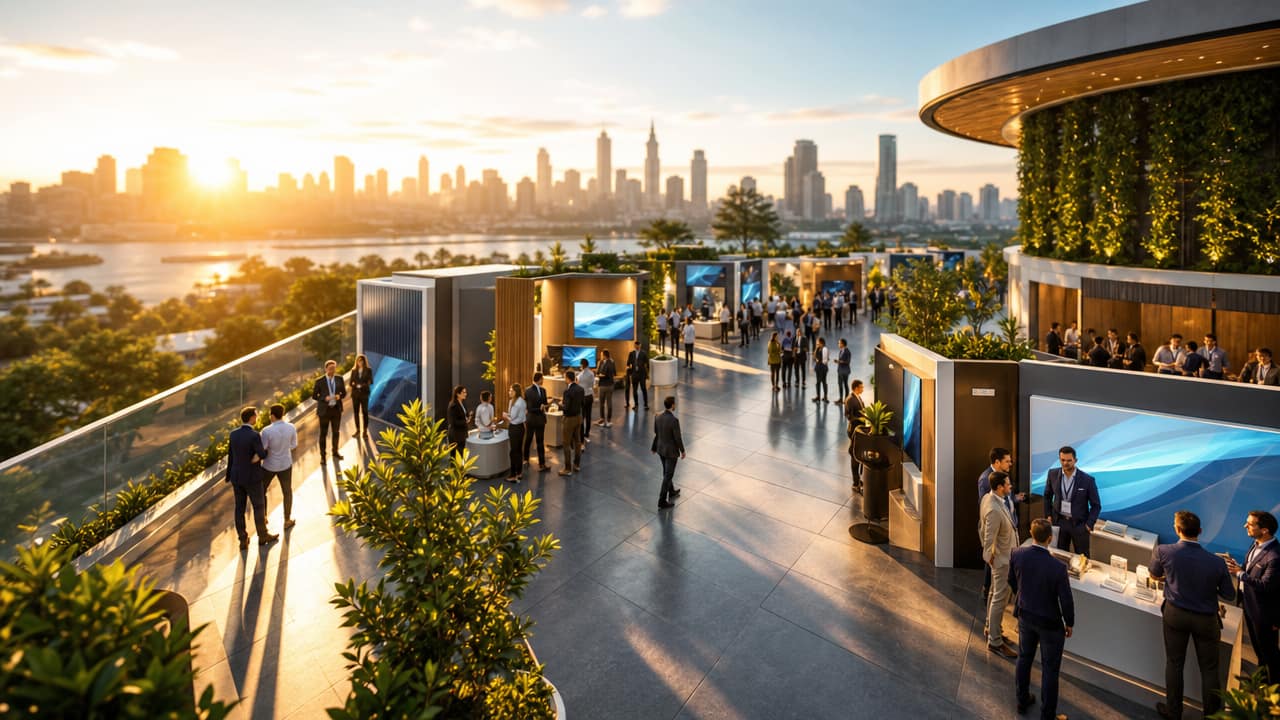
The role of social proof in attracting trade show visitors is fast becoming a make-or-break factor for Australian exhibitors. In packed venues where every stand competes for fleeting attention, visitors rely heavily on cues from other people’s choices. When social proof is weak or invisible, even well-funded Trade Show Marketing efforts struggle to convert passing interest into genuine engagement.
On a busy show floor, attendees constantly scan for signals that a stand is popular, trusted and worth their time. Crowds, conversations, and visible outcomes act as shorthand for value, shaping which exhibitors feel “safe” to approach. In this context, social proof exhibition marketing is less about hype and more about showing clear evidence that others have already found the stand useful or influential.
Australian visitors increasingly treat trade shows like curated marketplaces, prioritising stands already drawing attention. This creates a compounding effect: a modest crowd suggests relevance, which then attracts more people. By contrast, a quiet stand, even with quality products, can send an unspoken warning that something is missing, undermining otherwise strong exhibition marketing plans.

The damage from weak social proof is often subtle. Stands look polished, staff are ready, and pre-event trade show promotion appears successful, yet visitors walk past without stopping. Conversations begin with “So what do you do?” rather than “I heard about your stand from…”, revealing that word-of-mouth and trust cues are missing.
These patterns point to a deeper issue: most of the budget goes into logistics, while the signals that drive trust and exhibition lead generation with reviews receive minimal attention. In a competitive environment, that imbalance quietly erodes return on investment. Exhibitors are left guessing why registrations looked healthy but exhibition lead generation on the day fell short.
For Australian marketers, the missed opportunity is not just lower leads, but weaker long-term positioning. Competitors who invest in social proof trade show promotion build momentum event after event, as each show generates more credible stories, referrals and outcomes. When that cycle is absent, every exhibition feels like starting from scratch.
Recognising these warning signs early allows teams to reframe how they plan Trade Show Marketing, placing equal weight on testimonials, stories and visible engagement as on stand design and collateral. If you’re unsure where your social proof breaks down, now is the time to review past events, talk with experts, and recalibrate your strategy before another show floor exposes the same gaps.
Input your search keywords and press Enter.