


The role of furniture in enhancing stand functionality is central to how visitors experience your presence at an Australian trade show. When furniture is planned alongside Exhibition Stand Design, it does more than fill space; it supports movement, comfort, and meaningful business conversations. By thinking carefully about how people walk, sit, and interact, you can turn a standard stand into a highly efficient environment that supports your marketing objectives and staff workflow.
Functional furniture should always align with your goals, whether that is lead generation, product demonstrations, or hosting existing clients. In exhibition booth design, every chair, table, and counter needs a job to do, from facilitating quick chats to anchoring technology displays. Choosing ergonomic trade show furniture helps reduce fatigue for both visitors and staff during long event days. When furniture is integrated into the initial planning stages, you avoid clutter and create a stand that feels intentional and easy to navigate.
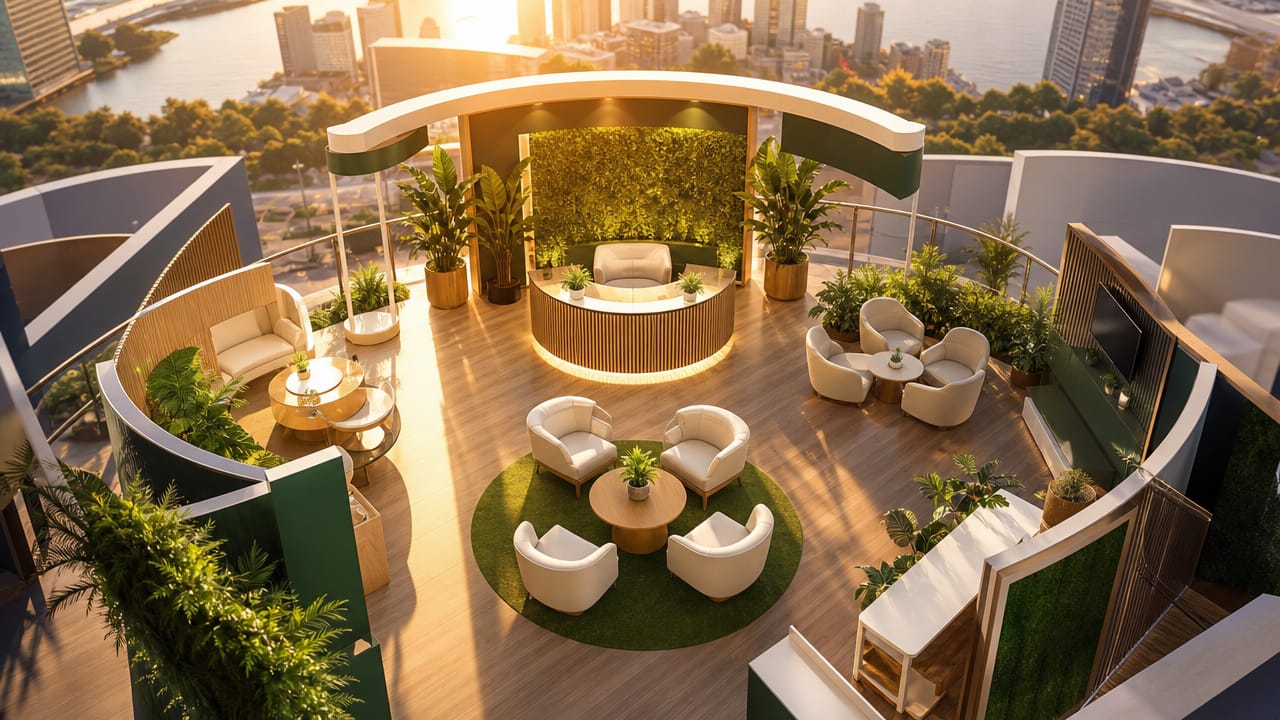
Furniture directly influences how long visitors stay and how relaxed they feel while speaking with your team. High stools for demo counters are ideal for short, informal interactions where visitors can quickly view a product or screen. In contrast, comfortable client meeting furniture, such as armchairs and low tables, encourages deeper business discussions. Modular booth seating solutions also allow you to adapt layouts between event days. These choices signal whether your stand is set up for quick enquiries, in-depth consultations, or a mix of both.
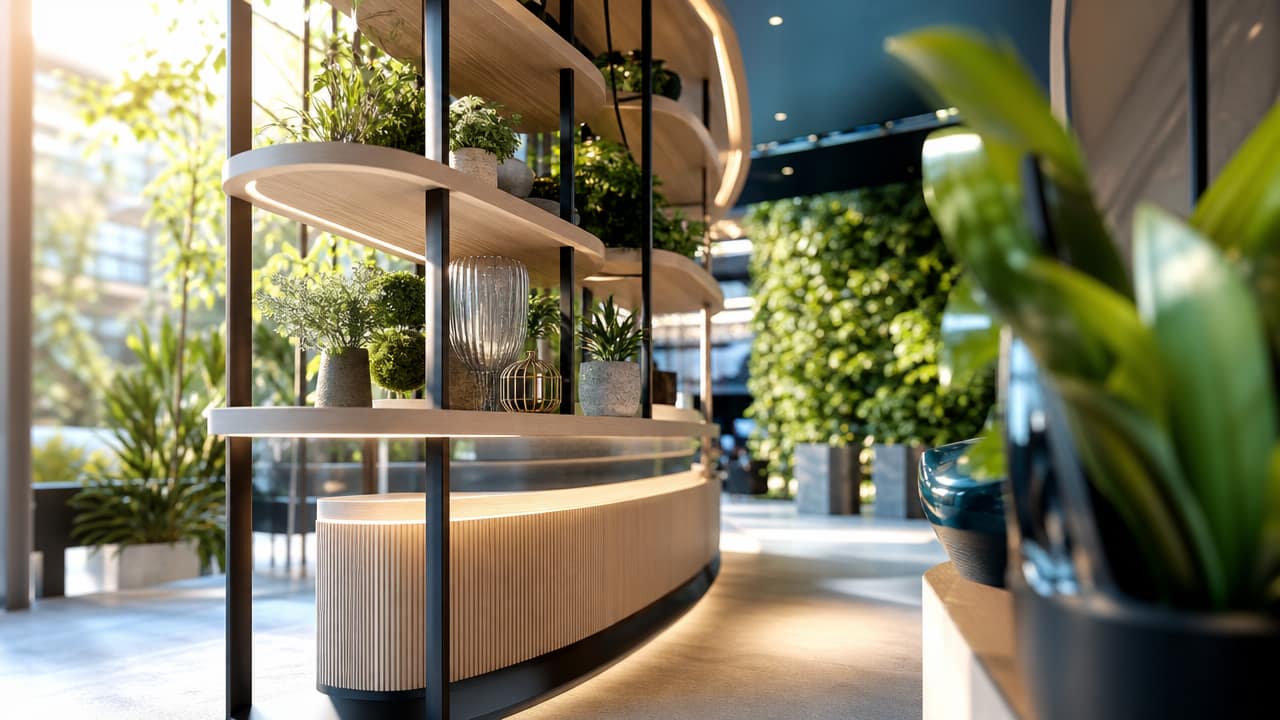
Using furniture to create zones is an efficient way to structure your stand without building extra walls. Café-style tables near the aisle work well for first enquiries, while semi-enclosed clusters with lounges support confidential conversations. Flexible lounge areas in booths help you respond to fluctuating crowd levels throughout the day. Storage-integrated display counters and space-saving product display units keep materials organised and accessible. For exhibitors investing in custom exhibition stands, zoning also supports clearer staff roles and smoother visitor handovers.
Well-chosen furniture should look professional yet still prioritise safety, accessibility, and traffic flow. Slimline pieces and modular arrangements help avoid bottlenecks and maintain clear 1–1.5 metre pathways, in line with common venue guidelines. Rounded corners, stable bases, and non-slip finishes are important for public liability and compliance. Branded reception desks for stands can provide a strong visual anchor without dominating the footprint. As you explore exhibition stand ideas, consider how each piece affects visibility, walking routes, and wheelchair access.
Before finalising your furniture, clarify how many visitors you expect, what conversations you want to have, and what equipment must be accommodated. Match seating and tables to specific tasks, from quick literature handouts to detailed product demos. Coordinating finishes with flooring, graphics, and lighting reinforces your branding and makes the space feel cohesive. If you are unsure where to start, discuss furniture layout options with your stand builder so the design supports both form and function. To learn more, ask an expert to review your next stand plan with furniture in mind.
Input your search keywords and press Enter.