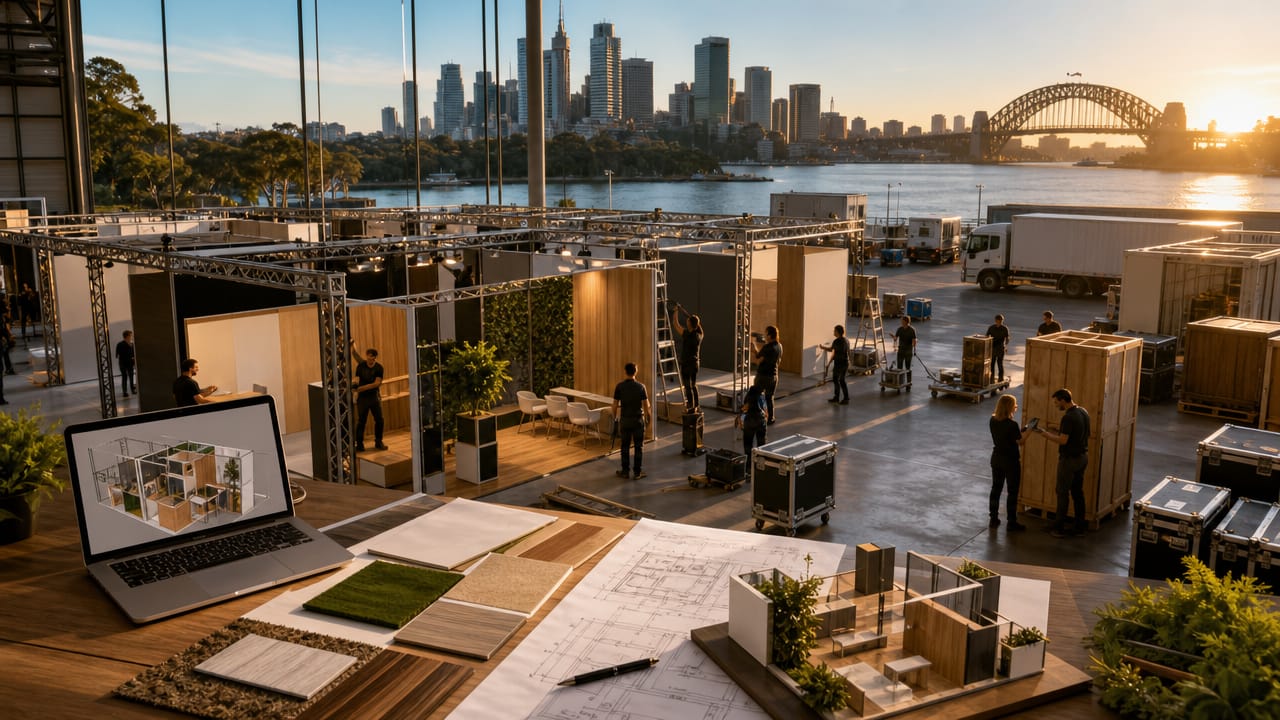



Exhibition stand planning is becoming a higher-stakes exercise for Australian businesses as trade shows bounce back and competition for attention intensifies. With budgets under scrutiny and audiences expecting more engaging experiences, companies are looking for structured, low-risk ways to design stands that deliver measurable outcomes. Rather than treating each event as a one-off, organisations are increasingly turning to solution-focused frameworks, tools and expert partners to streamline decisions and improve return on investment.
A structured Exhibition Stand Planning approach starts with clarifying the commercial objective: lead generation, brand positioning, or a specific product launch. From there, businesses can use an exhibition planning checklist to compare options such as custom-built stands, modular systems, or hire packages. Custom builds offer maximum creative control but demand higher budgets and longer lead times, while modular stands provide flexibility across multiple events and venues. Hire or rental solutions can be ideal for testing new markets or when exhibition frequency is low.
For many organisations, the most visible choice lies in the design and technology mix. A detailed exhibition planning timeline helps teams coordinate stand design, graphic production, and interactive elements like touchscreens, AR demos or live presentations. Technology-led solutions work best when they directly support the visitor journey, from first glance through to data capture. Meanwhile, logistics partners can manage freight, storage and installation, reducing pressure on internal teams and clarifying pre-exhibition planning responsibilities, particularly when events run back-to-back around the country.
People remain central to any event-ready exhibition stand planning strategy. A clear exhibition stand staffing plan should match roles to goals: product specialists, lead-capture staff and senior decision-makers for key meetings. To measure performance, many exhibitors now adopt an exhibition stand planning guide that tracks metrics such as qualified leads, meeting quality and post-show conversion rates. Local nuances also matter; australian trade show planning typically factors in venue rules, labour costs, sustainability requirements and regional travel logistics across states and territories.
For organisations juggling multiple events, working with specialists can turn a complex process into a manageable, repeatable system. Independent experts can benchmark suppliers, refine concepts and provide a practical exhibition stand planning guide tailored to sector, budget and venue mix. By treating each event as another step in a long-term strategy, businesses can evolve their solutions over time instead of starting from scratch. To assess options, compare stand formats, and build a plan that fits your next season of shows, consider speaking with an experienced advisor and formalising your approach to Exhibition Stand Planning.
Input your search keywords and press Enter.