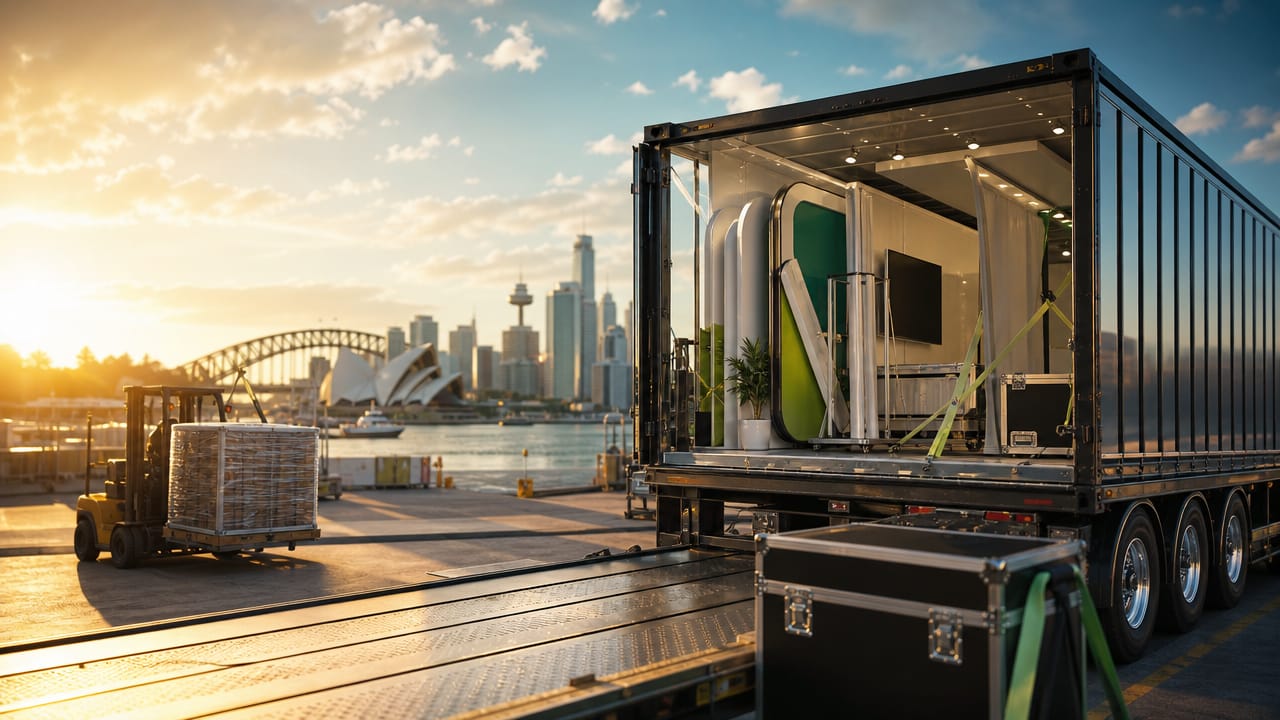



Transporting exhibition stands in Australia can quickly become complex, especially when deadlines are tight and assets are high value. This essential checklist for transporting exhibition stands in Australia outlines practical options, risks and decision points so marketing teams, agencies and exhibitors can choose the right solution with confidence.
At the core of any successful exhibition transport plan is clarity on what is moving, when it must arrive and how it will be handled on site. A detailed inventory, measured in both cubic metres and weight, underpins accurate exhibition freight quotes and realistic trade show delivery schedules. From there, decisions around custom packaging, labelling and insurance determine how well your stand withstands multiple moves across cities such as Sydney, Melbourne and Brisbane. Treat each show as a full project, not just a shipment.
Unlike standard freight, exhibition transport is governed by fixed bump-in slots, restricted venue loading dock access and limited on-site storage. Missed windows can lead to costly delays, overtime labour or incomplete installations on opening morning. Specialist providers with a focus on trade show logistics understand marshalling yards, dock booking systems and security requirements at major convention centres. They also know how to manage time-sensitive event freight when flights, weather or traffic threaten carefully planned schedules.
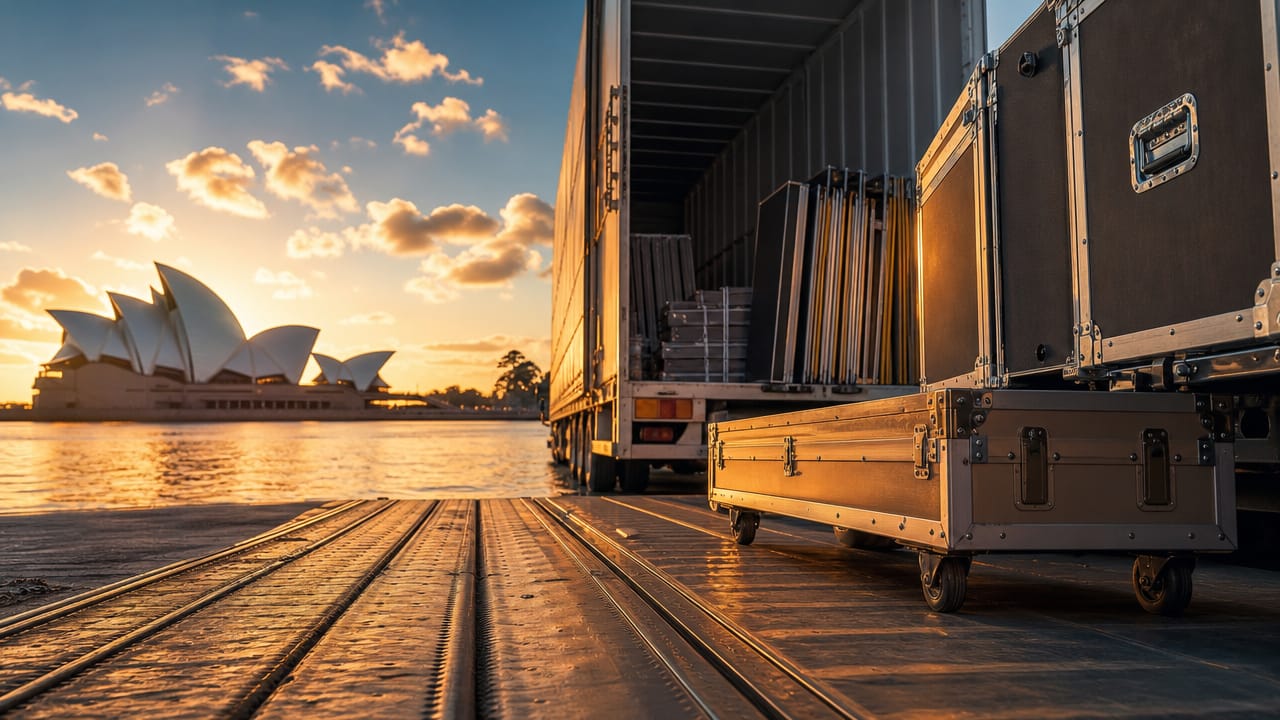
Direct door-to-venue road moves suit single-city shows with straightforward timelines and minimal consolidation needs. For touring campaigns, interstate exhibition transport services using consolidated linehaul can cut costs but require hard cut-off dates and disciplined packing. Exhibitors with modular stands often pair this with secure exhibition stand storage between events to avoid repeated rebuilds. Where AV and custom finishes are involved, reusable crates and cases designed for multiple handlings reduce both damage risk and installation time.
Choosing a logistics partner starts with experience at your target venues and proven capability in coordinating exhibition freight suppliers nationally. Look for providers offering tracking, on-site supervisors and robust contingency planning, especially for international exhibition freight or multi-city tours. Services that integrate Exhibition Logistics and Freight, including customs support, storage and local transport, usually provide clearer accountability. For complex stands or overlapping shows, this end-to-end coordination is often the difference between a smooth build and a last-minute scramble.
Ultimately, the right solution balances budget, risk and operational complexity. Smaller activations may manage with basic carriers and internal coordination, while national campaigns tend to benefit from specialist oversight and structured checklists. As you map out your next event calendar, use these criteria to compare options and confirm capacity well before peak seasons. If your team is facing tight windows, multiple cities or intricate builds, now is the time to speak with an exhibition logistics expert and lock in a tailored transport plan that protects both deadlines and brand assets.
Input your search keywords and press Enter.