



Australian exhibitors are grappling with rising costs and shrinking backroom space, making it harder to house bulky stands, lightboxes and promo stock between events. Without a plan, gear ends up damaged, misplaced or rushed between venues at premium rates. For brands investing heavily in their events program, smart storage linked with Exhibition Logistics and Freight is becoming a quiet competitive edge rather than an afterthought.
Self-storage units remain a popular form of temporary storage for exhibition stands, especially for smaller teams with a few cases or modular displays. Climate-controlled sites and 24/7 access can work well when shows are sporadic, but they rely heavily on in-house staff to manage packing, checking and dispatch. At the other end of the spectrum, commercial warehouses and 3PL providers offer inventory systems, pallet racking and staff trained in trade show logistics, reducing the chance of last-minute scrambles.
Specialist providers combine warehouse space with exhibition freight, kitting and venue delivery, creating a single chain of custody from depot to show floor. Materials are received, photographed, barcoded and stored, then picked and labelled ahead of each event with timed delivery to exhibition venues wherever possible. Services can extend to on-site handling of display materials, basic assembly and return transport for trade show equipment, giving marketing teams clearer visibility over where every asset is, and when it moves.
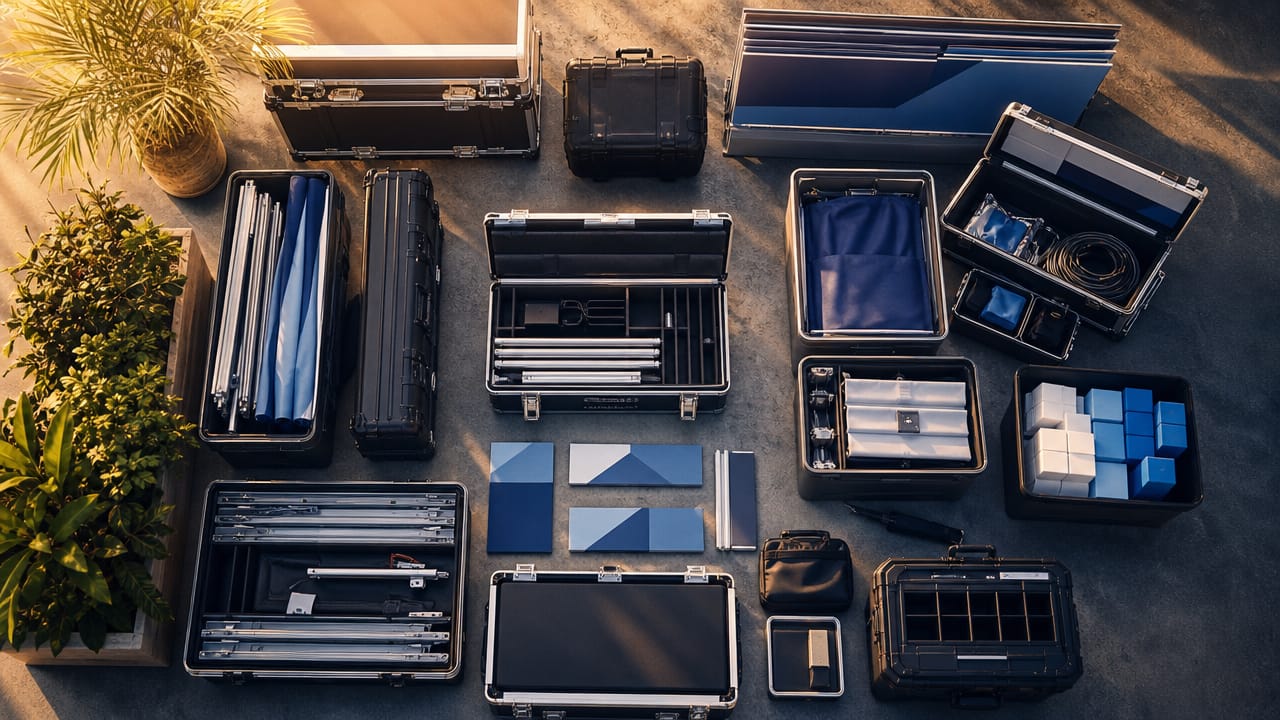
Security, access and proximity to major venues in Sydney, Melbourne and Brisbane are top of mind for decision-makers seeking secure storage for exhibition freight. CCTV, monitored alarms and condition reporting are now baseline expectations for high-value audiovisual gear and custom stands. It is also worth scrutinising how providers handle exhibition transport, including whether they coordinate australian trade show transport services, provide cost-effective exhibition freight options, or support interstate trade show freight planning during busy seasons.
Leading operators link storage with door-to-door exhibition transport and on-ground support, reducing double handling and shrinkage. For frequent exhibitors, the ability to combine exhibition freight with installation, on-site checks and dismantle can streamline operations and support consistent brand presentation across the calendar. Many Australian firms now expect providers to manage both outbound moves and return transport for trade show equipment, rather than juggle multiple suppliers for each leg.
As budgets tighten, marketing and events teams are demanding storage solutions that lower total program costs, not just warehouse line items. An expert logistics partner can model different approaches, from lean self-storage backed by ad hoc carriers through to fully integrated national networks. For organisations planning a busy season of shows, now is the time to review how your materials are stored, moved and tracked, and to speak with a specialist who can benchmark your current setup against best-practice Exhibition Logistics and Freight and help you choose the right mix of services for the year ahead.
Input your search keywords and press Enter.