



In Australia’s fast-moving events sector, many brands still underestimate how much local insight shapes exhibition success. Even the most striking concept can falter if it collides with venue rules, unfamiliar regulations or mismatched audience expectations. When planning major shows in Sydney, Melbourne, Brisbane or Perth, the role of Exhibition Stand Builders with on-the-ground knowledge becomes less about decoration and more about avoiding costly missteps.
The first warning sign is assuming a stand that worked overseas will translate seamlessly to an Australian venue. Subtle differences in fire codes, accessibility standards and services can derail imported designs. This is where local vs interstate builders becomes a live issue, as remote teams may not fully grasp restrictions until bump-in. By then, last-minute changes, rush orders and design compromises can quickly chew through budgets.
Each major convention centre has its own playbook on ceiling heights, rigging points, loading docks and work hours, and exhibition stand contractors who lack this familiarity often misjudge what is feasible. Australian trade show contractors also have to manage union rules, overtime rates and seasonal freight bottlenecks. Add the cultural layer: a tech-heavy stand that dazzles in Europe may feel tone-deaf at a regional agribusiness expo, where practical demos and conversation spaces matter more than spectacle.
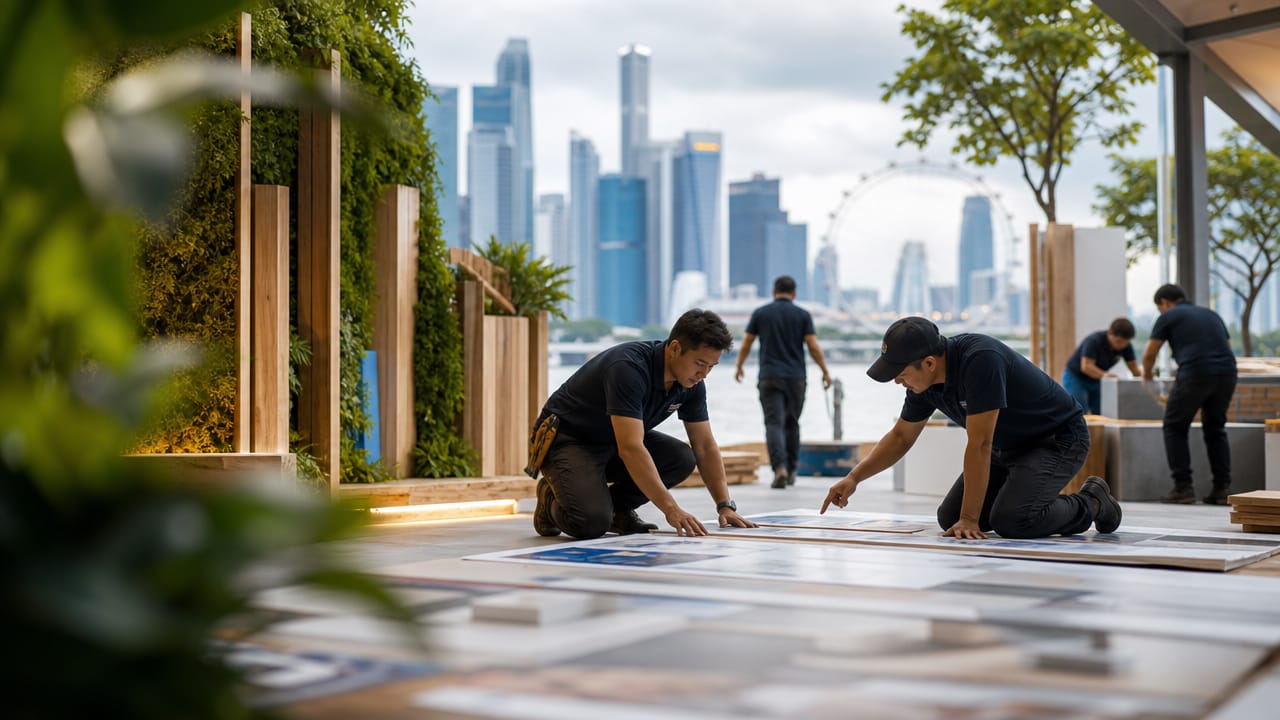
Several patterns suggest local knowledge is missing, long before the show opens. Companies may rely on overseas exhibition stand companies for design while assuming a local crew can “figure it out” on site. Freight arrives late or incomplete because customs, quarantine and road freight timings were misread. AV or rigging support turns out to be limited or more expensive than expected, revealing that logistics planning never truly accounted for local conditions.
Behind these symptoms sit deeper structural issues. Brands may engage trade show stand builders too late, locking in design decisions before compliance checks or local audience research. Others try to coordinate multiple trusted trade show contractors separately, only to discover gaps between what each supplier thought was “standard”. Without local exhibition stand specialists orchestrating these moving parts, misunderstandings become almost inevitable.
Over time, the cumulative impact is serious: missed leads, strained teams, reputational damage with venues and spiralling costs across a full events calendar. Many marketers only realise the pattern after several underperforming shows. At that point, shifting to experienced exhibition stand partners becomes less a nice-to-have and more a form of risk management. Working with local knowledge stand builders or the best local stand company for your sector allows assumptions to be challenged early, concepts to be tested against real venue constraints, and budgets to be protected from avoidable surprises. If your recent shows have suffered from compliance scares, unexpected invoices or disengaged visitors, now is the moment to reassess your approach, speak with local experts and ensure your next stand is planned with genuine Australian insight at its core.
Input your search keywords and press Enter.


