



The Importance of Accessibility in Stand Design is rapidly becoming a critical concern for exhibitors across Australia. When accessibility is overlooked in Exhibition Stand Design, brands risk excluding a significant share of visitors, including the one in five Australians living with disability. The result is not only lost leads on the show floor, but also potential complaints under the Disability Discrimination Act and missed chances to demonstrate genuine inclusion.
Many businesses invest heavily in visual impact yet fail to notice basic barriers that make their stand hard to enter, navigate or understand. A striking structure means little if a wheelchair user cannot pass the entry point or a visitor with low vision struggles to read key messages. These gaps undermine even the most sophisticated exhibition booth design, signalling to attendees that accessibility was not considered from the outset.
Access problems often emerge in subtle but consistent ways on the show floor. Narrow aisles, tight corners and poorly planned furniture layouts can make otherwise custom exhibition stands effectively off-limits. Single-height counters, high product shelves and the absence of ergonomic product display heights create further hurdles, forcing some visitors to rely on staff assistance rather than exploring independently.
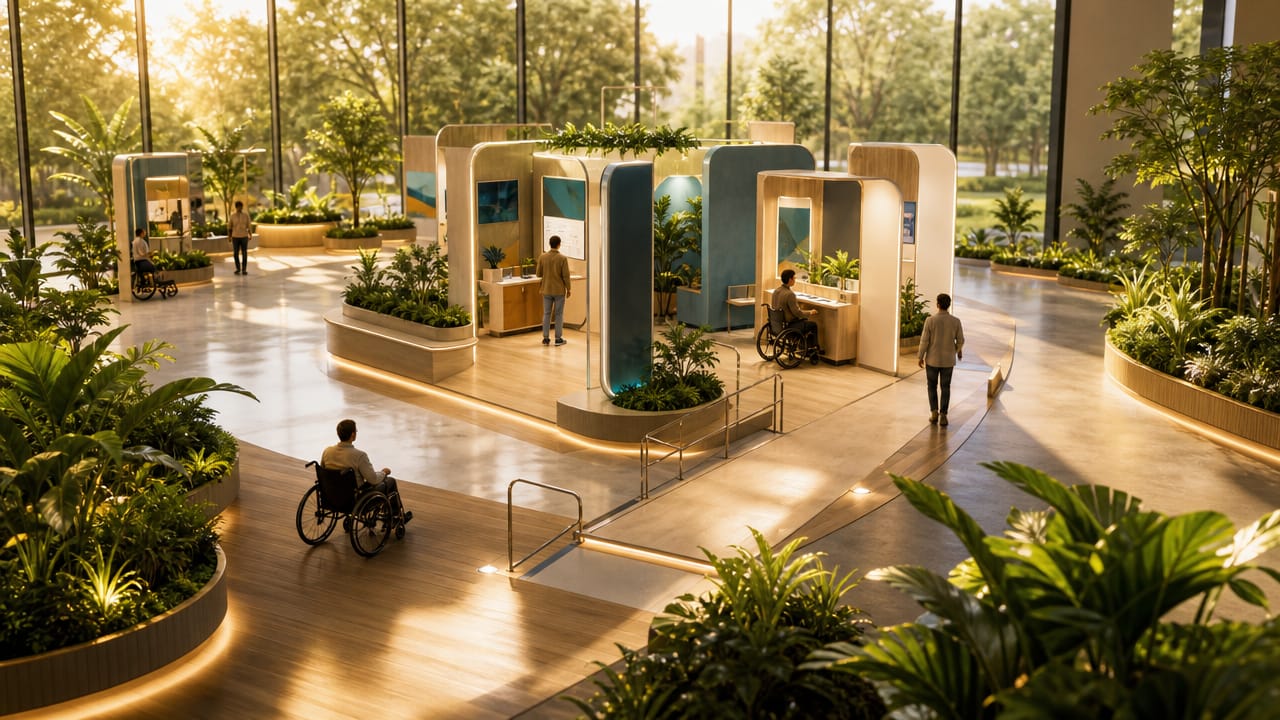
Focusing solely on spectacle encourages towering screens, complex shapes and dark colour palettes that can work against accessibility. Without planning for inclusive exhibition booth layouts, turning circles and clear sightlines, small changes on bump-in day can block pathways or emergency exits. Missed opportunities include wheelchair-friendly custom stands with step-free entries, high-contrast stand graphics for low-vision visitors and low-glare exhibition lighting that reduces eye strain.
Another common issue is assuming digital content alone solves accessibility. Over-reliance on small touchscreens can exclude people with limited reach, dexterity or vision, particularly when alternative formats are not provided. Accessible trade show stand design demands more than a token ramp; it requires a deliberate approach to circulation space, information design and comfort for everyone using the space.
In a competitive events market, treating accessibility as an afterthought in Exhibition Stand Design means ceding ground to exhibitors who plan for inclusion from day one. Forward-thinking teams are already exploring practical exhibition stand ideas that blend aesthetics with usability for diverse audiences. Reviewing your current stand layout, traffic flow and access features with experienced specialists can surface quick wins before your next show.
If you are unsure whether your stand is truly inclusive, now is the time to assess potential risks rather than wait for visitor complaints. Engage your team, walk the stand from multiple perspectives and seek expert guidance on best-practice, wheelchair-friendly custom stands that reflect both your brand values and legal obligations. Taking action early will protect your reputation, improve engagement and ensure every visitor feels welcome at your next event.
Input your search keywords and press Enter.


