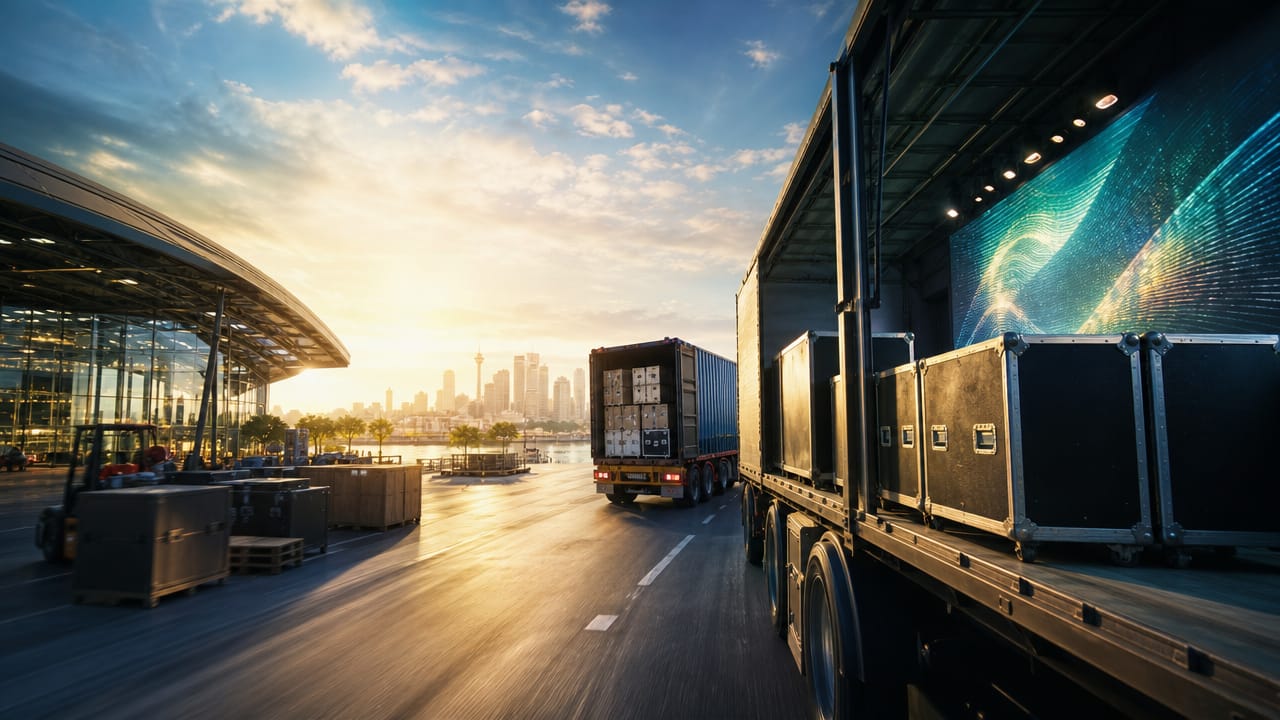
Handling exhibition equipment transport efficiently has become a critical concern for Australian exhibitors under pressure to move valuable stands, AV gear and branded assets between venues on tight schedules. A single missed delivery window or damaged crate can derail an event launch, so understanding the available solutions is essential. Today’s market offers a spectrum of service models, from budget carriers to end-to-end partners, each with distinct strengths, limitations and risk profiles.
Most organisations start with general carriers, using standard courier or road services for simple exhibition freight when timelines are flexible and assets are robust. This works for printed collateral and modular hardware but offers limited help with event venue loading dock access or venue-specific rules. Dedicated providers focused on trade show logistics add value through show-site knowledge, driver briefings and coordination with organisers. At the top end, full-service partners combine transport, on-site handling, packing advice and secure storage for display equipment between events or across a full exhibition calendar.
Regardless of the provider, packaging remains the first line of defence against damage, especially for LED walls, glass showcases and interactive tech. Custom cases, foam inserts and clear labelling reduce handling errors and support timed delivery for exhibition stands in busy dock areas. Exhibitors planning interstate exhibition freight planning often add tracking tools and clear escalation paths for delays or breakdowns. Transit insurance should be reviewed carefully, checking coverage from door to stand, including temporary depots and return freight after exhibitions, with attention to any exclusions around self-packed or uncrated items.

Within Australia, most exhibition transport solutions rely on scheduled road services, with urgent or last-minute consignments moving by air on premium tariffs. Providers experienced in australian trade show transport know how to navigate venue marshaling yards and strict access windows in capital city convention centres. International campaigns introduce customs paperwork, ATA carnets and quarantine checks, where missteps can trigger costly holds. For brands running multiple shows, coordinating multiple exhibition suppliers can be simplified by appointing a lead logistics partner to standardise packing systems, centralise communication and reduce duplicated handling.
Choosing the right partner for exhibition equipment transport ultimately comes down to risk appetite, event schedule and asset value. A lean, price-driven approach may suit a single local show, while national roadshows or global campaigns benefit from integrated support that spans packing design, exhibition freight movements and on-site services. To clarify your options, consider a short consultation with a logistics specialist who understands Exhibition Logistics and Freight, can analyse your calendar, and map out a transport strategy that protects your stand investment and event deadlines. Taking this step now can prevent costly disruption at your next show and give your team confidence heading into each bump-in.
Input your search keywords and press Enter.