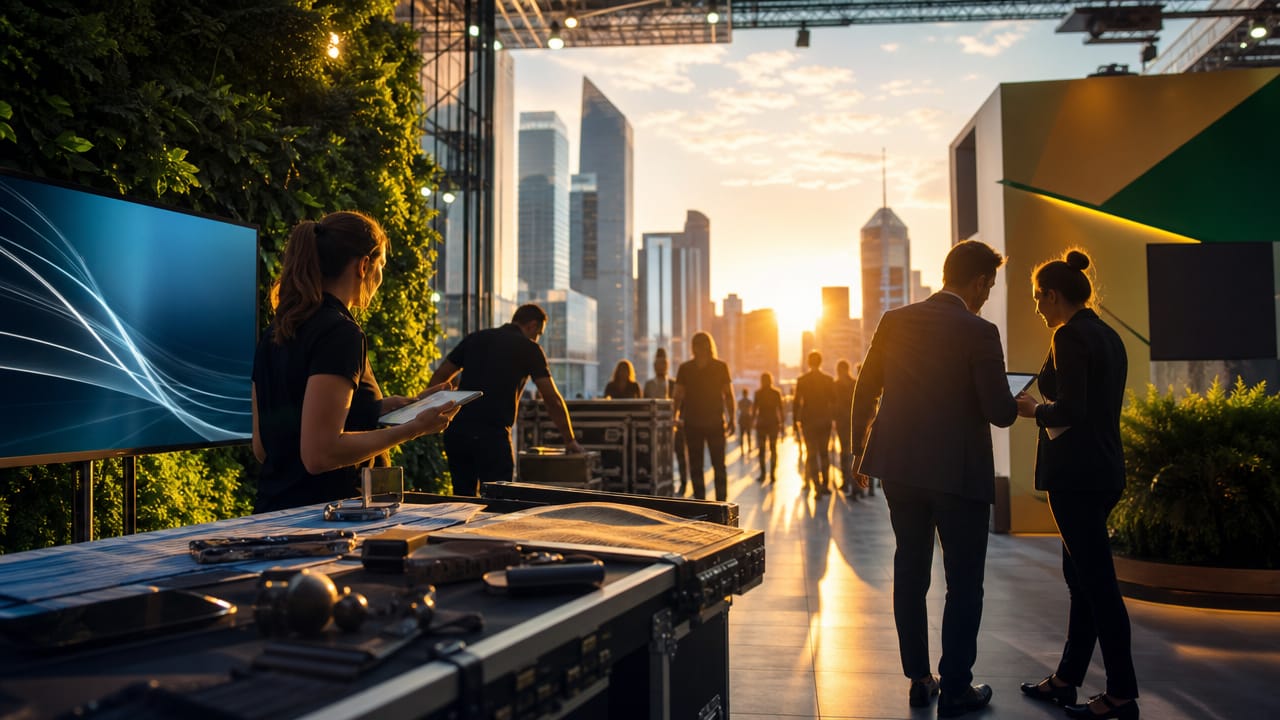



Creating a Pre-Show Checklist: What to Include
In a market where stand space, freight, and staffing costs are rising, exhibitors who treat pre-show planning as a strategic discipline, not an admin task, are the ones consistently turning trade shows into revenue engines.
A structured pre-show planning checklist is now a critical control tool for Australian exhibitors investing heavily in events. With venue lead times tightening and regulations evolving, relying on memory or old spreadsheets is commercially risky. High-performing teams use the checklist as a governance document that aligns sales, marketing, and operations around clear outcomes. Rather than simply “getting to showtime”, it ensures every activity links back to measurable commercial goals, protecting ROI in a volatile events landscape.
Before locking in logistics, leadership teams should use the checklist to interrogate why they are exhibiting at all. That means defining revenue-based objectives, target accounts, and buyer personas, not just lead volumes. The most effective exhibition planning checklist also specifies how leads will be qualified, scored, and handed to sales, reducing post-event ambiguity. By agreeing on success metrics and reporting formats upfront, marketers can defend budgets with data and rapidly benchmark performance across the events portfolio.
Operationally, a robust exhibition planning timeline should lock in stand size, utilities, and risk management well before creative decisions. In Australia, exhibition booking deadlines australia and WHS documentation windows can be unforgiving, so missed dates quickly erode design choices and cost control. Smart teams centralise freight schedules, customs requirements, and exhibition space requirements planning in one shared workspace. This reduces dependency on single individuals and supports faster decision-making when venues, contractors, or supply chains shift late in the cycle.
On the stand side, leading marketers approach Exhibition Stand Planning as an experience design challenge, not a décor exercise. That includes mapping visitor journeys, digital touchpoints, and trade show stand preparation steps that enable data-rich conversations. Technology choices, from lead capture apps to QR-based demos, must be tested against real-world floor conditions, not just office Wi-Fi. An exhibition stand briefing process that connects designers, sales leadership, and IT early will avoid costly redesigns and under-utilised tech onsite.
Critically, people and promotion are where many otherwise strong plans fail. A rigorous pre-show staff planning approach clarifies roles, coverage rosters, and escalation paths for hot opportunities. Integrating trade show preparation with account-based marketing helps pre-book meetings and avoid passive “wait and see” behaviour on the stand. Finally, an exhibition pre-event planning guide should formalise post-show workflows, from nurture sequences to executive debriefs. An australian exhibition planning timeline that includes follow-up as a core phase, not an afterthought, is what ultimately converts show-floor energy into sustainable pipeline.
To sharpen your next event, review your current pre-show planning checklist against these strategic pillars and identify where governance, data, or decision rights are unclear. If gaps emerge across objectives, operations, or people, it may be time to recalibrate your Exhibition Stand Planning with support from a specialist partner or cross-functional workshop that aligns every stakeholder around measurable commercial outcomes.
Input your search keywords and press Enter.