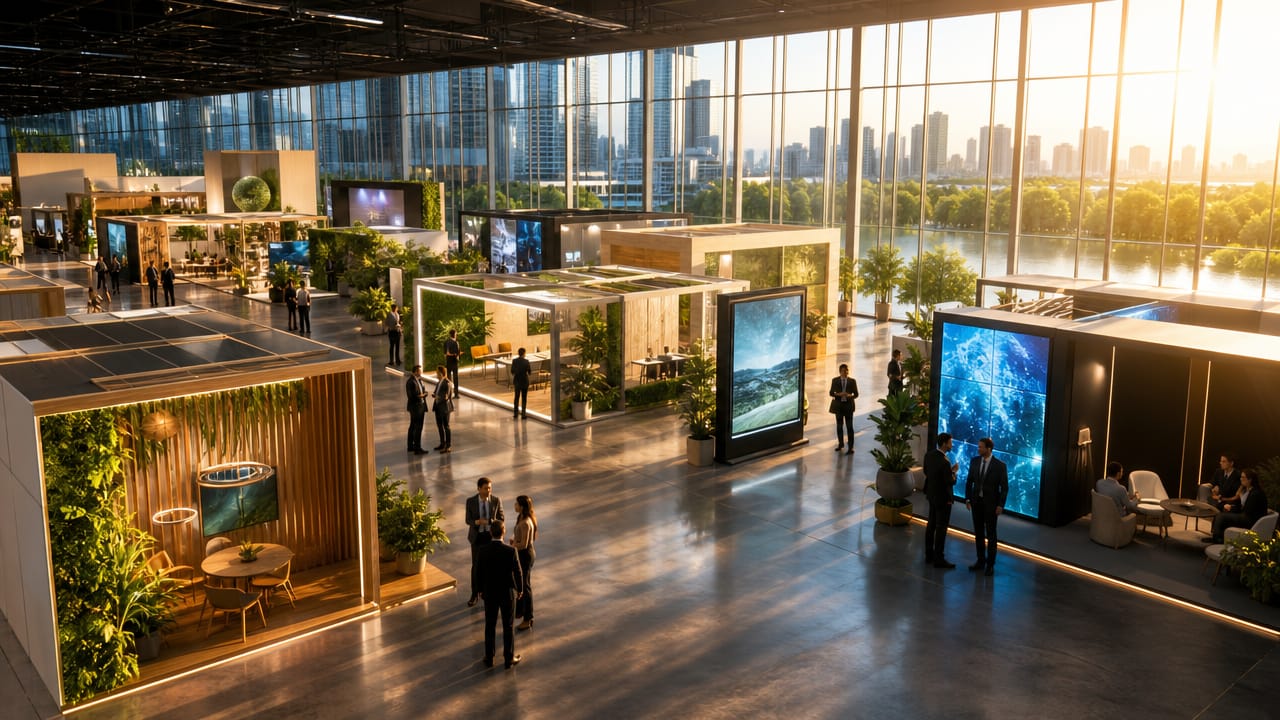



Australian exhibitors are heading into 2026 under intense pressure to stretch budgets, meet ESG targets and still deliver high-impact trade show results. Top Trends in Shell Scheme Design for 2026 Exhibitors are reshaping how brands think about organiser-supplied booths, turning basic packages into strategic marketing assets that can travel from city to city.
With ESG reporting rising up the corporate agenda, sustainable shell scheme design has shifted from nice-to-have to non‑negotiable. Exhibitors are prioritising modular systems, hire furniture and low‑waste shell scheme graphics that can be re-skinned rather than binned. High‑recycled aluminium frames and LED lighting are helping Australian brands cut embodied carbon while still presenting professionally on the show floor.
Instead of accepting a standard shell scheme booth, 2026 exhibitors are layering modular components onto the base structure. Clip‑on lightboxes, storage towers, counters and portable shell scheme backdrops create a custom look without custom-build costs. The same kit can be reconfigured for corner sites, inline spaces or island positions, protecting budgets across a full events calendar.

From LED tiles to tablet kiosks, tech is turning compact shell scheme displays into content‑rich environments. Exhibitors are using motion graphics, QR‑driven demos and simple touchscreens to guide visitors through products and capture data in real time. The most successful stands blend physical samples, digital storytelling and post‑show follow‑up, making Shell Scheme Stands a core part of always‑on marketing.
Organisers consistently report higher engagement on stands with open fronts and clear sightlines. In practice, this means removing barrier-style counters, using low furniture and planning a small shell booth layout that feels accessible from the aisle. Biophilic cues such as plants, timber finishes and softer lighting are also helping brands cut through harsh venue environments and reinforce sustainability credentials.
Marketing teams are tracking which shell scheme wall graphics pull traffic, which interactions convert, and how staff use space during peak times. Those insights now feed into modular shell scheme design kits that travel from Sydney to Melbourne, Brisbane and regional shows. By investing once in data‑informed, cost effective shell booth ideas, exhibitors can refine each outing rather than starting again every time.
If you’re planning a busy 2026 events calendar, now is the time to rethink how your shell scheme investment performs from one show to the next. Speak with an exhibition design specialist who understands the Australian market to review your current set‑up, explore smarter shell scheme booth solutions and develop a future‑ready stand strategy that drives qualified leads at every event.
Input your search keywords and press Enter.