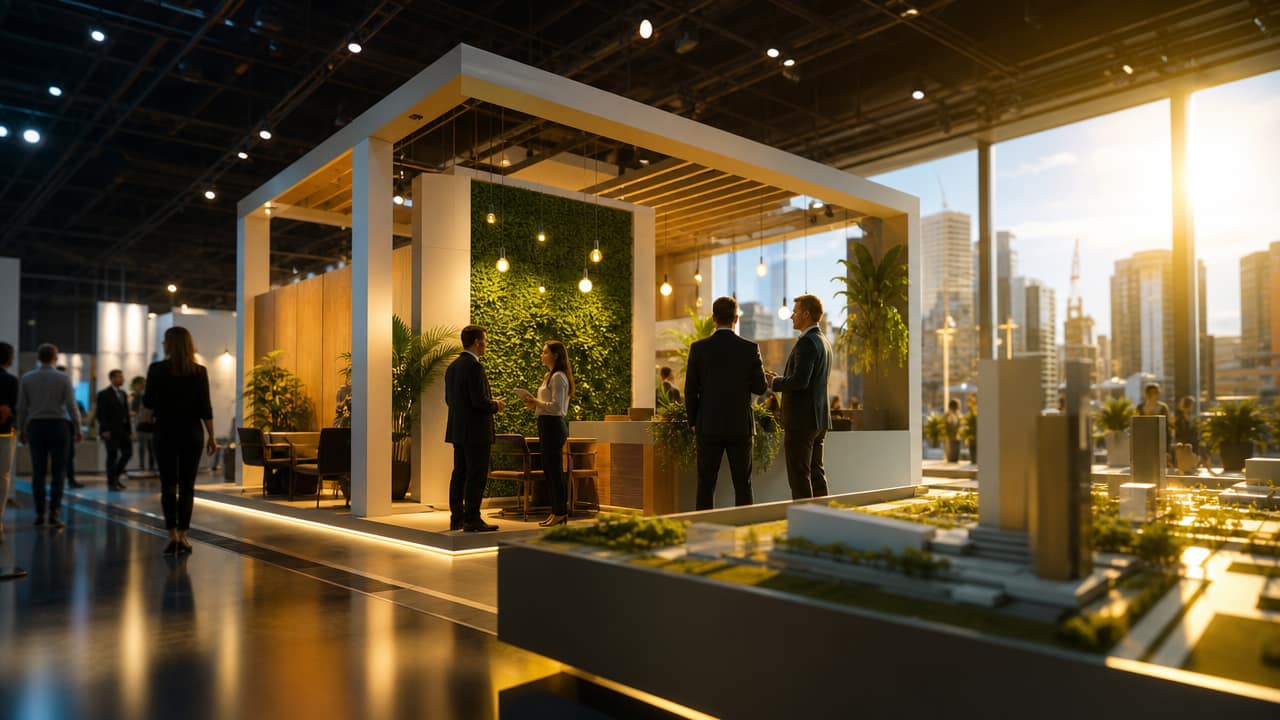



The Role of Stand Size in Your 2026 Exhibition Budget
Exhibition Stand Costs in Australia are increasingly under scrutiny as marketers plan tighter 2026 budgets and look for clearer value from every square metre. Venue operators typically charge on a cost per square metre comparison basis, with premiums for corner, island and high-traffic positions, which can materially alter your total investment. Beyond floor space, exhibition stand pricing must also factor in design, materials, labour, power, rigging and venue-mandated services that scale with stand size. For brands mapping out a trade show budget across multiple Australian cities, even modest differences in footprint can compound quickly over a season of events. Understanding how each element scales from a 9m² booth to a 36m² build is the first step towards a right-sized exhibition stand spend in 2026.
The jump from a standard 3×3 shell scheme to a custom 6×6 island stand does more than double visual impact; it reshapes your entire stand size cost breakdown. Larger builds require additional structural engineering, higher-spec flooring, more extensive lighting, and greater graphic coverage to avoid empty, under-branded zones. Custom modular systems are emerging as a flexible solution, enabling brands to scale a core kit of parts up or down between shows while controlling budgeting for larger stands. For companies experimenting with new markets, this approach can reduce risk compared with commissioning a one-off, fully bespoke build. Small stand savings potential still exists with clever vertical design, high-impact graphics and digital demos that reduce the need for physical product displays.
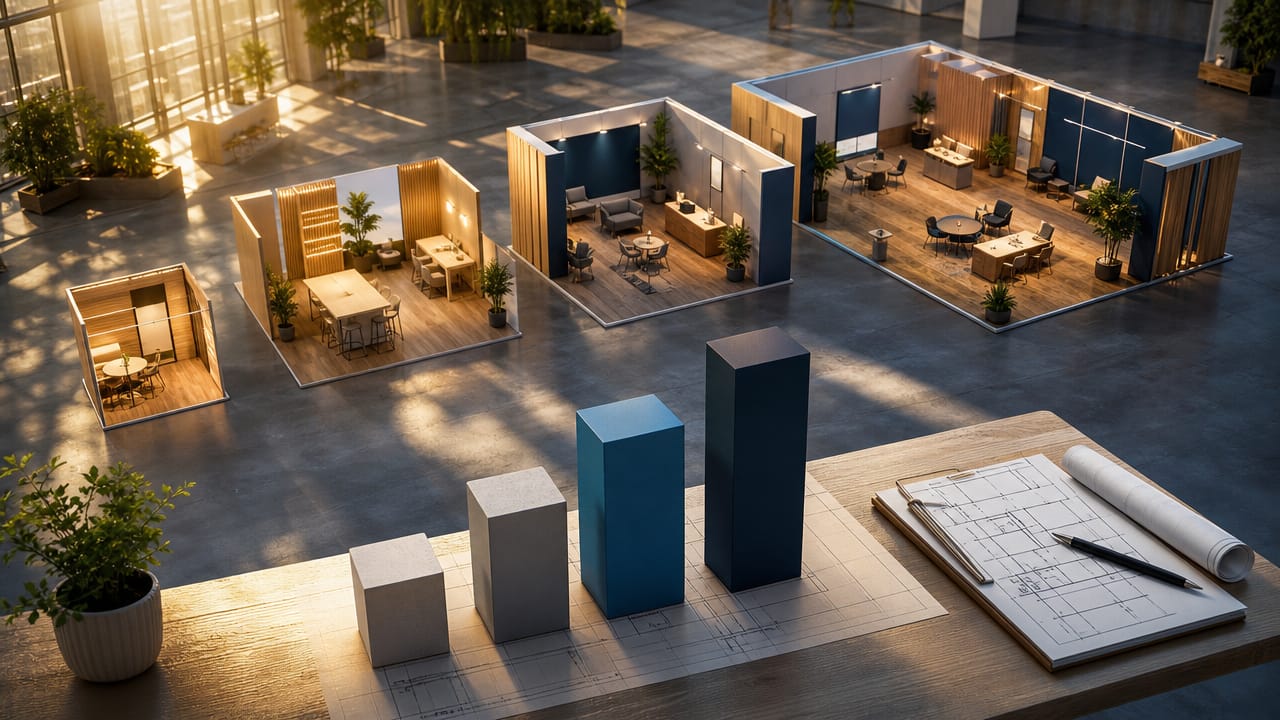
Stand size directly affects the number of staff required to cover the space, manage demos and maintain service levels during peak times. A compact footprint may be manageable with two to three people, while larger island stands often need rotating teams of sales staff, technicians and brand ambassadors. Freight and storage costs rise with volume and weight, particularly when shipping between Sydney, Melbourne and Brisbane, which can influence exhibition stand quotes from different suppliers. Installation and dismantle times also lengthen as footprints expand, triggering higher labour charges and stricter venue scheduling requirements. These operational factors should be modelled alongside build costs when aligning stand size with budget constraints.
Choosing the right footprint for 2026 means balancing presence with practicality and measurable return. Brands with data-led marketing teams are increasingly benchmarking Exhibition Stand Costs against lead quality, sales-cycle length and post-show pipeline value. Some are commissioning cost per square metre comparison reports that factor in design reuse across multiple events rather than a single outing. Others are working with specialists to obtain independent exhibition stand quotes that separate venue pass-through charges from creative and production fees. To make informed decisions, consider engaging an exhibition consultant who can model scenarios, pressure-test your assumptions and guide you towards the most effective stand size for your objectives.
If you are planning your next Australian trade show, use these insights to compare options, test different footprints and clarify your right-sized exhibition stand spend before you commit. Speaking with an experienced exhibition specialist can help you interpret competing proposals, refine your trade show budget and select a solution that fits both your brand ambitions and financial limits. Book a consultation or request tailored advice now so your 2026 stand size becomes a strategic asset, not an unchecked cost.
Input your search keywords and press Enter.