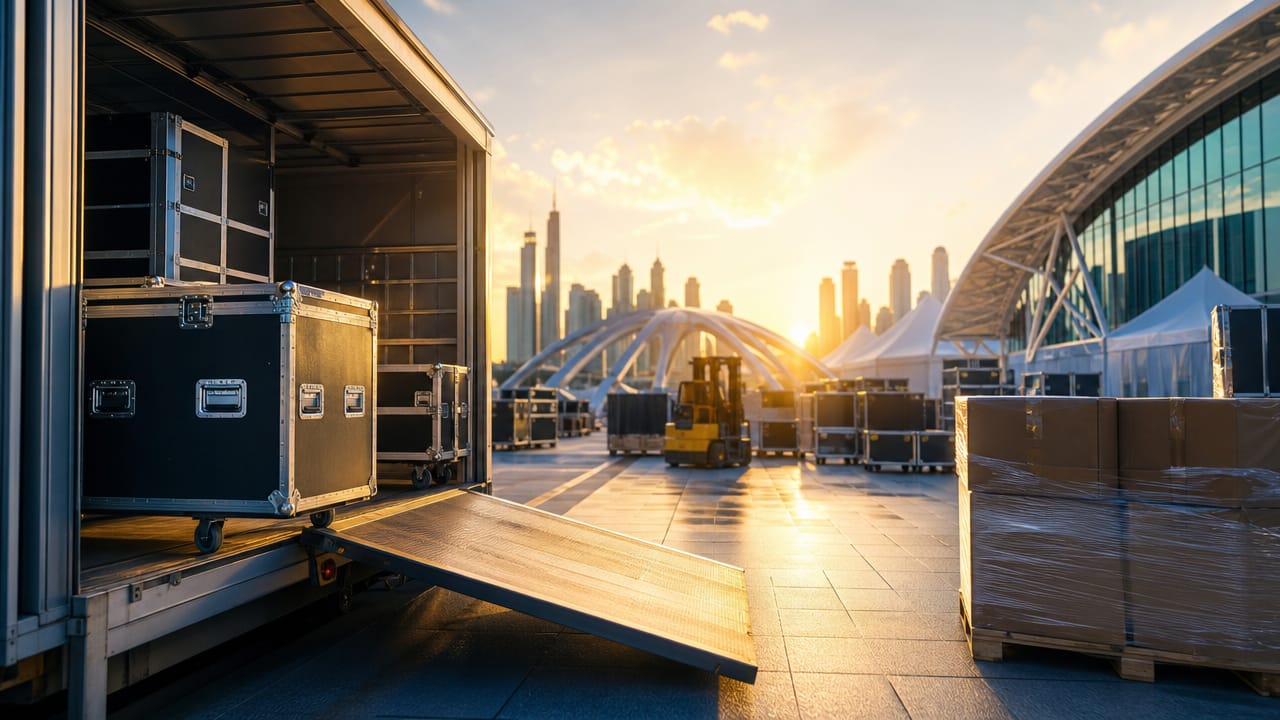



Unexpected freight disruption is now a defining risk for Australian exhibitions, not an edge case. Climate shocks, port congestion and volatile global schedules mean organisers must treat Exhibition Logistics and Freight as a strategic capability, not a backstage chore. Events that manage freight with the same discipline as content and sales consistently report higher exhibitor ROI, stronger sponsor loyalty and fewer last‑minute crises on the show floor.
Freight resilience is now a competitive differentiator for exhibitions, not just an operational safeguard.
Australia’s freight network is under sustained pressure, with extreme weather, industrial action and global realignments converging. For the event sector, this manifests as late exhibition freight, misplaced crates and unpredictable clearance times. Organisers who still assume “standard transit times” are effectively betting their exhibitor experience on outdated averages. Instead, leading teams model freight as a live risk variable, with scenarios built around partial arrivals, split consignments and missed connections.
Resilient event freight strategies start with hard‑headed risk mapping across ports, airports, road corridors, venue loading dock access and customs and biosecurity requirements. With urban freight volumes expected to surge, realistic exhibition freight delivery windows must replace optimistic promises. Diversifying carriers, routes and modes can offset single‑point failures, while contingency budgets should reflect current market volatility rather than pre‑pandemic benchmarks. The most robust plans also account for temporary storage for exhibition freight when timings inevitably shift.
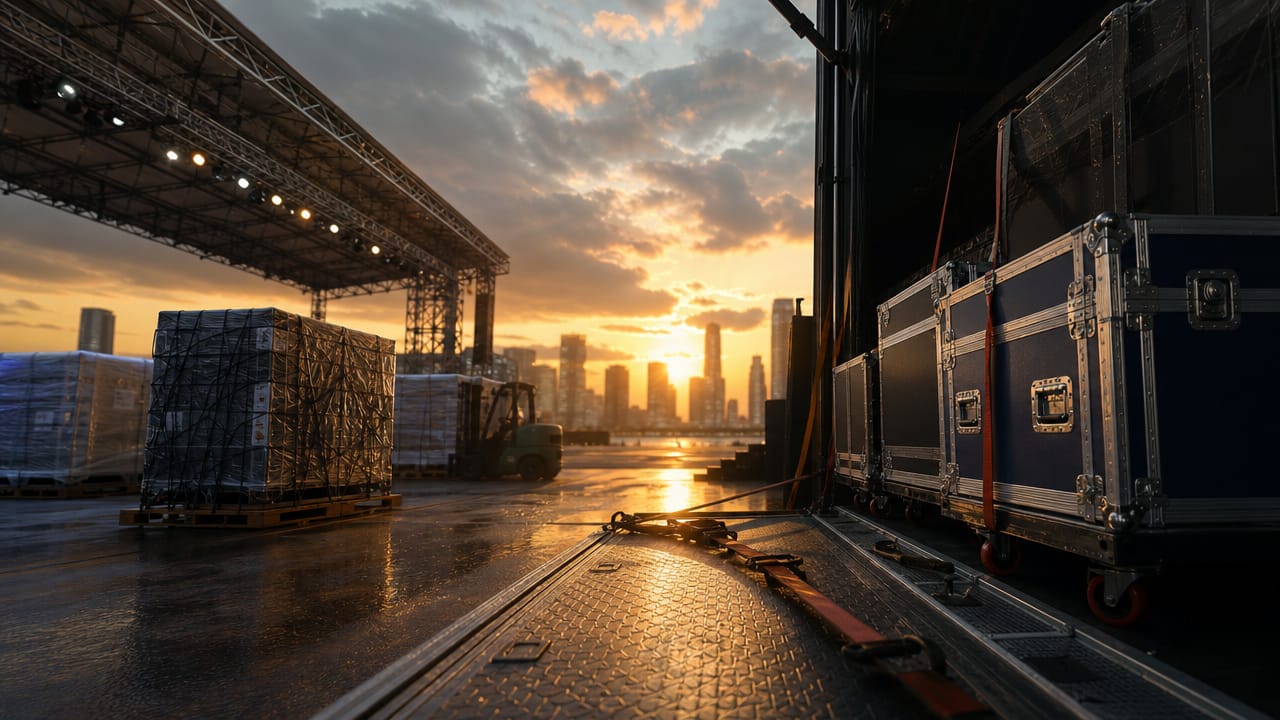
Too many events have thick risk registers but thin execution. High‑performing organisers translate event freight planning tips into operational playbooks that define escalation paths, decision thresholds for shifting from sea to air, and clear authority for approving additional spend. Real‑time visibility across trade show logistics is essential, with shared dashboards linking freight forwarders, venues and contractors. Embedding on-site trade show logistics support during bump‑in and bump‑out turns theory into fast, coordinated action when shipments slip.
Partnerships with freight specialists are also evolving. Leading exhibitions now involve logistics experts during floorplan design, not just at bump‑in, to stress‑test access routes, marshalling areas and exhibition transport assumptions. For australian trade show freight, early collaboration helps align crate design with venue constraints and minimises time on docks. Progressive organisers also plan for return transport of exhibition stands and interstate exhibition transport services upfront, reducing post‑event chaos and unbudgeted cost blowouts.
To future‑proof your next show, start with a concise diagnostic: list your top five freight failure scenarios and document your first three responses for each. Validate those responses with your logistics partner, including how they would protect critical exhibition freight while maintaining safety and compliance. Then, run a pre‑event simulation focused on delayed containers and partial arrivals at key venues. Finally, embed learnings into a living playbook that is rehearsed before every show, not filed away after sign‑off.
Organisers who treat freight resilience as core design, not contingency, will be best placed to navigate ongoing disruption. By elevating Exhibition Logistics and Freight to boardroom visibility, Australian event leaders can protect exhibitor returns, safeguard reputation and unlock new formats that depend on reliable movement of goods. Now is the time to review your current strategy, challenge old assumptions and speak with a specialist logistics partner about strengthening your next event’s freight playbook.
Input your search keywords and press Enter.