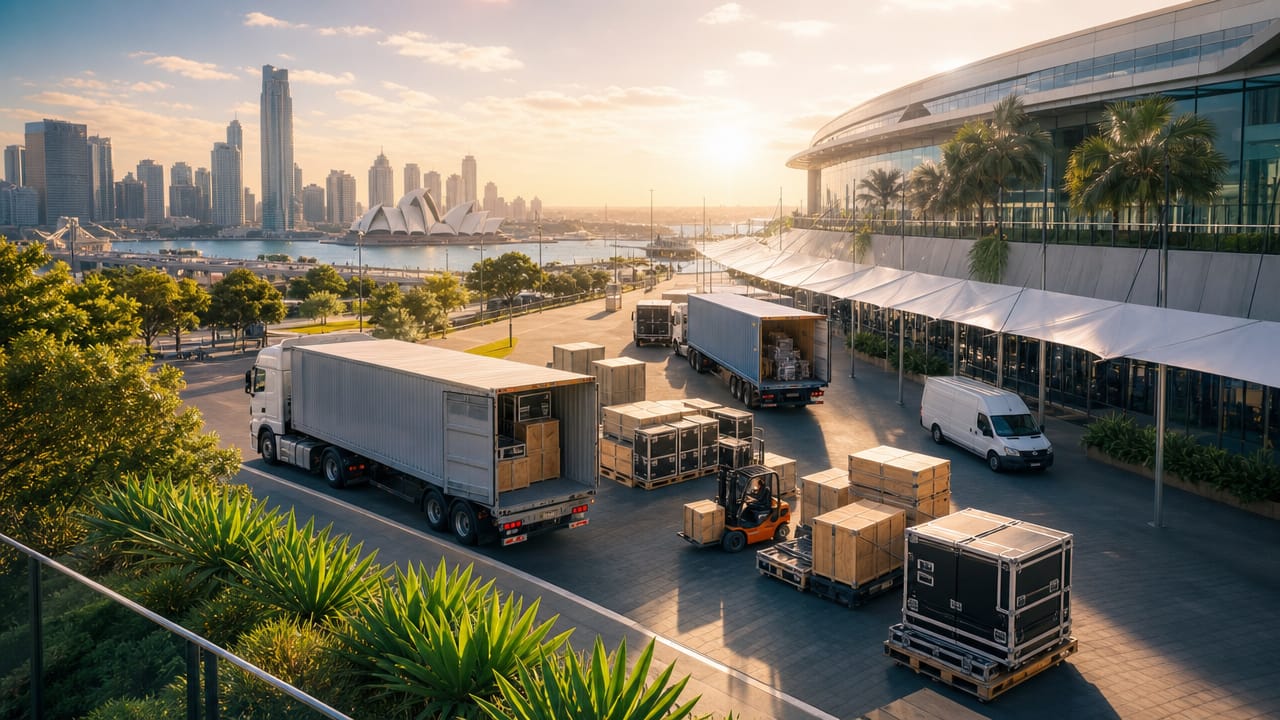



How to plan efficient freight for trade shows in Australia is becoming a critical question for exhibitors facing tighter timelines and rising costs. With vast distances between cities and strict venue schedules, australian trade show freight demands careful coordination rather than last‑minute scrambling. Empty stands, delayed materials and rushed builds can quickly erode marketing budgets and brand impact, making smart exhibition freight planning a strategic priority.
Australia’s exhibition calendar is concentrated in major hubs such as Sydney, Melbourne, Brisbane, Perth and Adelaide, creating long domestic legs and pressure on trade show logistics providers. Venues enforce strict bump-in and bump-out windows, with venue loading dock access often shared by multiple contractors and exhibitors. When trucks are queued or time slots are missed, crews can be left waiting while hire costs climb. Against this backdrop, choosing the right mix of exhibition freight and support services becomes as important as the stand design itself.
Most exhibitors start with general road or air carriers for palletised or boxed goods, as these can be cost-effective across interstate exhibition freight lanes. However, they typically provide kerbside or dock-only delivery, with little flexibility if schedules change. Specialist providers such as 4. Exhibition Logistics and Freight offer integrated exhibition transport, including door-to-stand handling, onsite liaison and return freight from exhibitions. For high-value or time-critical items, express couriers and air freight plug gaps, particularly for AV gear, prototypes or replacement collateral, though costs scale quickly.
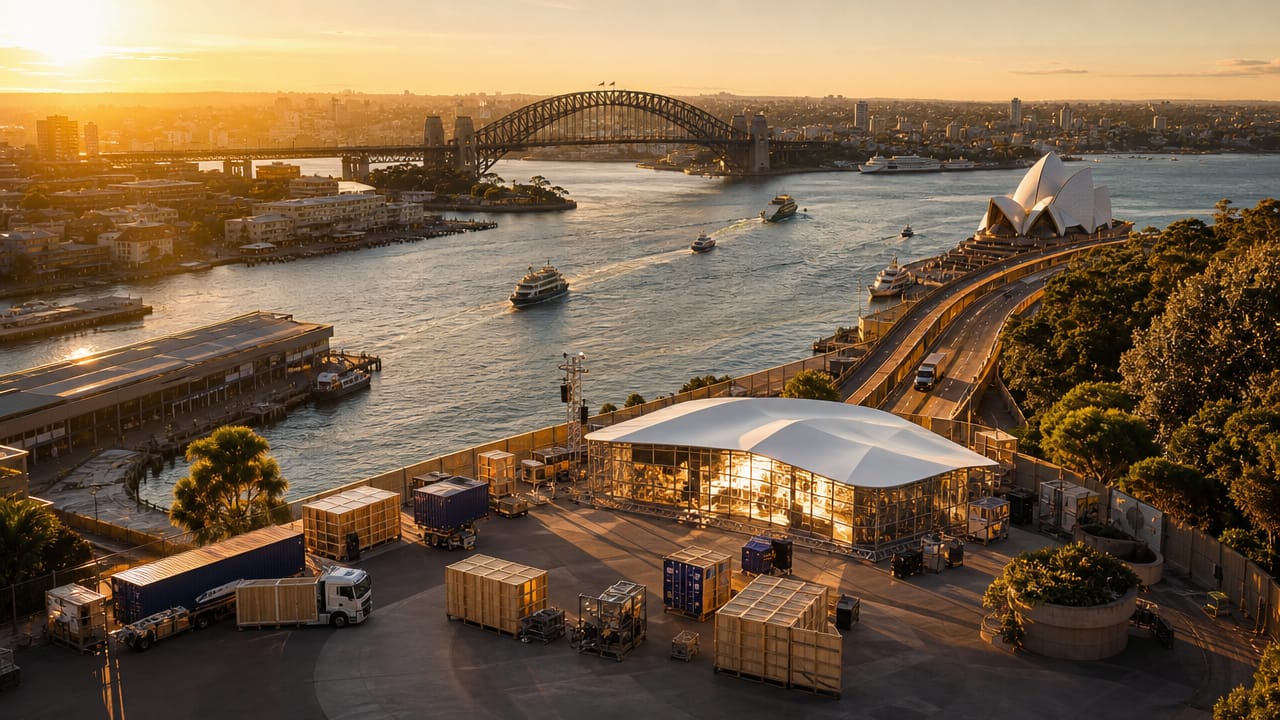
Efficient event transport and logistics starts with clarifying what matters most: cost control, certainty, or flexibility. For low-risk, reusable materials with long lead times, consolidating on general carriers can work well. Complex builds, premium brand launches or back-to-back events usually justify a specialist partner who can manage exhibition stand transport and coordinate on‑site crews. Many exhibitors opt for a hybrid model, pairing a specialist for critical elements with general freight for bulk stock and express services as contingency.
For teams managing multiple events or international shipments, expert guidance can turn fragmented bookings into a cohesive freight strategy. A consultative session with a specialist in exhibition freight can highlight risks, refine timelines and align costs with commercial priorities. By investing early in how to plan efficient freight for trade shows in Australia, exhibitors improve reliability, reduce stress on marketing teams and protect the impact of every show. To optimise your next calendar of events, speak with an experienced logistics partner and compare structured options before you lock in your freight plan.
Input your search keywords and press Enter.