



How to Optimise Your Trade Show Budget for Maximum Impact
In a constrained market, Australian exhibitors cannot afford to treat events as expensive theatre. The real competitive edge lies in designing trade show spend as a performance portfolio, not a discretionary cost centre.
In a softer economic climate, boards are demanding clearer returns from Trade Show Marketing, forcing marketers to justify every line item. With business events contributing billions to Australia’s economy, trade shows remain highly visible — and highly scrutinised — investments. The organisations pulling ahead are those reframing their presence as part of a broader exhibition marketing strategy tied directly to pipeline and revenue outcomes. This shift demands tighter objectives, disciplined measurement, and the courage to exit legacy shows that no longer perform.
Before committing to floor space, senior marketers should define a small set of measurable commercial goals, such as qualified exhibition lead generation, named-account meetings, or revenue influenced within six months. These metrics become the decision rules for where, and how, you invest. Leading Australian teams now treat their events calendar like an investment portfolio, concentrating spend into a handful of flagship shows. Supporting events play an experimental role, used to test high-impact exhibition marketing ideas, formats, and audiences without diluting core investment.
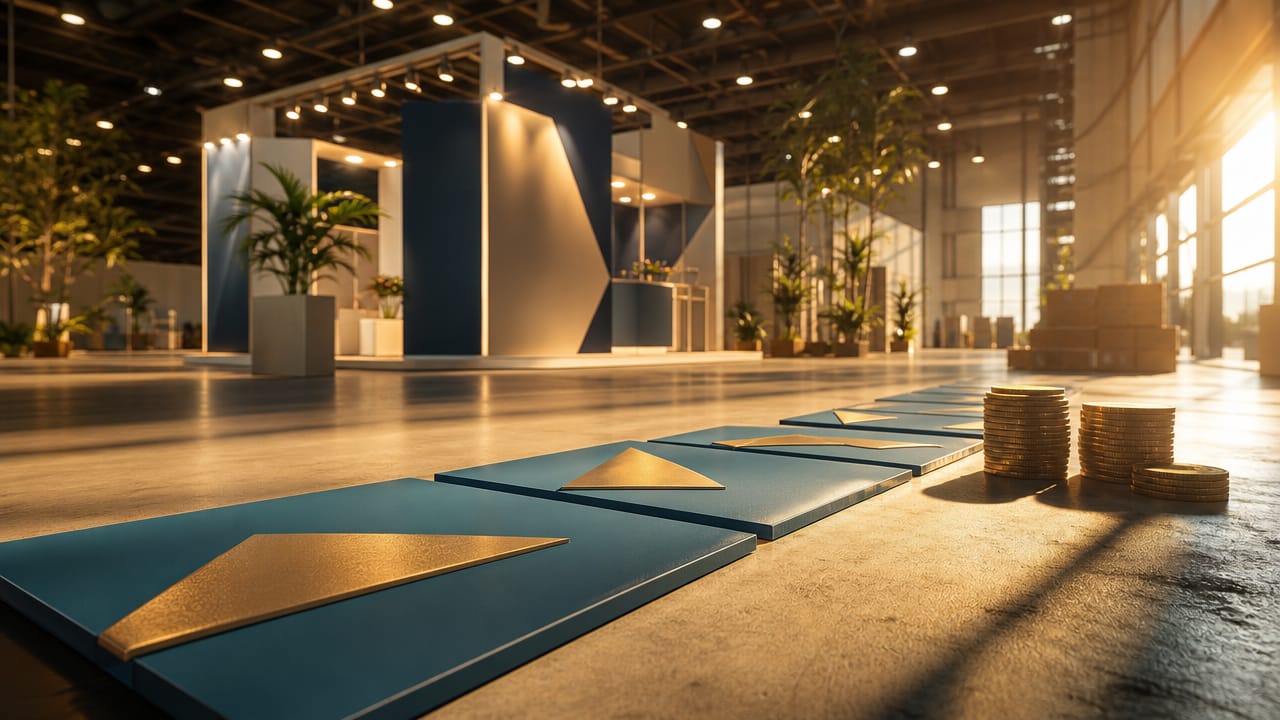
Australian exhibitors frequently overspend on stand aesthetics while underinvesting in activities that drive qualified conversations. A visually striking build may help trade show promotion, but without a robust exhibition lead generation strategy, the commercial impact is limited. Redirecting budget towards pre-booked meetings, scripted demos, and decision-maker roundtables reliably improves deal velocity. On site, focus on throughput and quality: staffing to peak traffic, structured presentations, and tools that capture rich context for follow-up, enabling data-driven exhibition marketing long after the show closes.
To maximise ROI, marketers should distinguish clearly between must-have and performance-driving costs. Space, core stand, and essential travel are table stakes; incremental funds must be justified by their impact on qualified exhibition lead generation or revenue influence. Budget-friendly trade show promotion can be achieved through targeted account outreach, partner co-marketing, and tightly sequenced nurture programs rather than broad, unfocused branding. Over time, this discipline turns trade show promotion for exhibitors into a repeatable growth engine instead of a recurring expense.
Conducting a rigorous post-event review is now a board-level expectation. Analyse cost per lead, cost per opportunity, and eventual win rates by show, not just in aggregate. Events that fail to meet threshold returns should lose budget, regardless of tradition or internal preferences. Equally, shows delivering strong commercial outcomes deserve additional investment in trade show promotion tactics and experiential enhancements. By continually reallocating spend based on evidence rather than sentiment, Australian marketers can transform their events program into a compounding strategic asset.
To move from ad hoc activity to a performance-led program, start by mapping your last three major events against pipeline, deal size, and sales-cycle impact. The gaps will quickly reveal where your next dollar should go. If you are ready to stress-test your current approach, review your annual calendar, re-forecast spend against clear revenue targets, and engage a specialist to redesign your exhibition marketing framework for sustainable growth. Take the next step today by aligning your next event plan to measurable, board-ready outcomes.
Input your search keywords and press Enter.