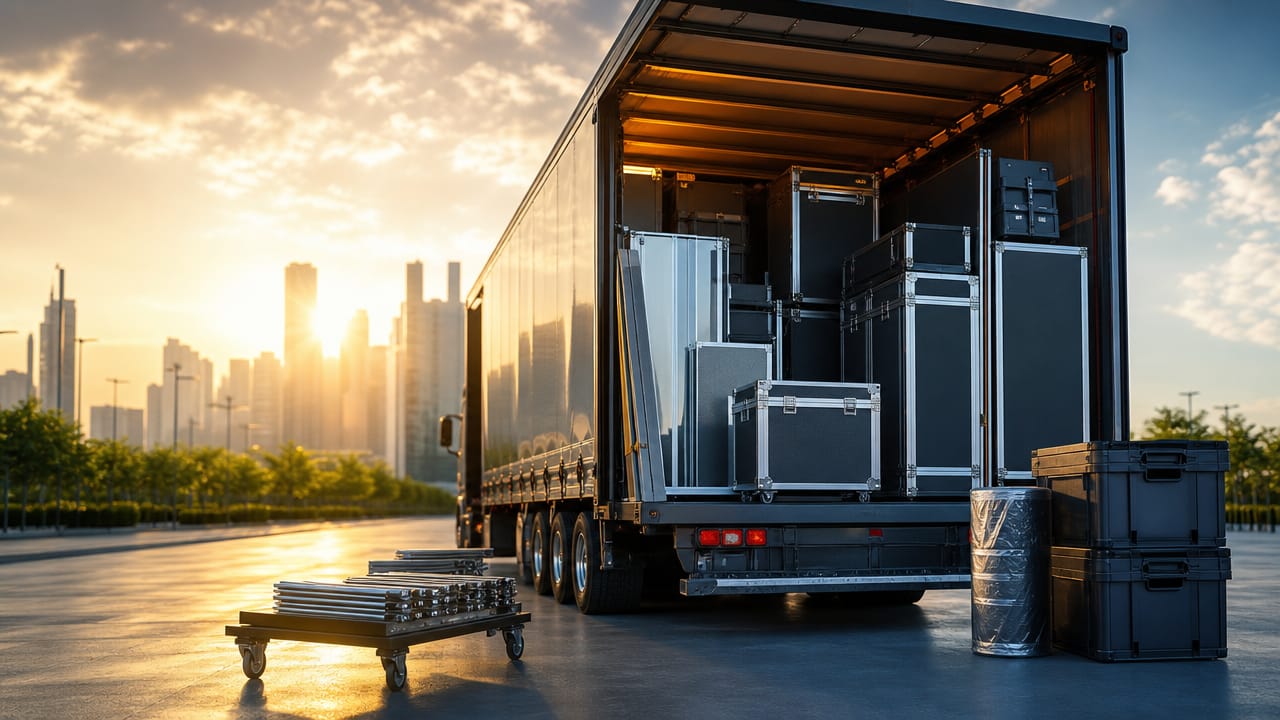



Maximising space in freight for trade show materials is essential for Australian exhibitors looking to control costs and protect valuable displays. Space-efficient packing reduces volumetric charges, minimises damage, and keeps complex schedules on track. Whether you are shipping a compact stand to a regional event or coordinating large exhibition freight for a national tour, careful planning will help you achieve reliable, predictable outcomes.
Australian trade show logistics in Australia often involve long road legs, tight venue access windows, and strict carrier cut-off times. Freight is usually billed on whichever is greater, actual weight or volumetric weight, so poorly packed crates can significantly increase your budget. When exhibition freight is arranged late or packed inefficiently, you may need extra pallets, larger vehicles, or premium services just to meet deadlines. Well-planned loads also stack more safely, reducing handling risks for AV gear, graphics, and custom joinery.
Begin with a detailed inventory of everything you intend to ship, then separate items into essential, optional, and replaceable categories. Many exhibitors discover that spare furniture, bulky decor, or excess print runs can be sourced locally or removed entirely. This early review is one of the most effective exhibition freight planning tips. Next, ensure all large structures are fully disassembled, including counters, lightboxes, and truss sections, with clearly labelled hardware and tools. This approach shortens install time and makes maximising exhibition transport space far easier.
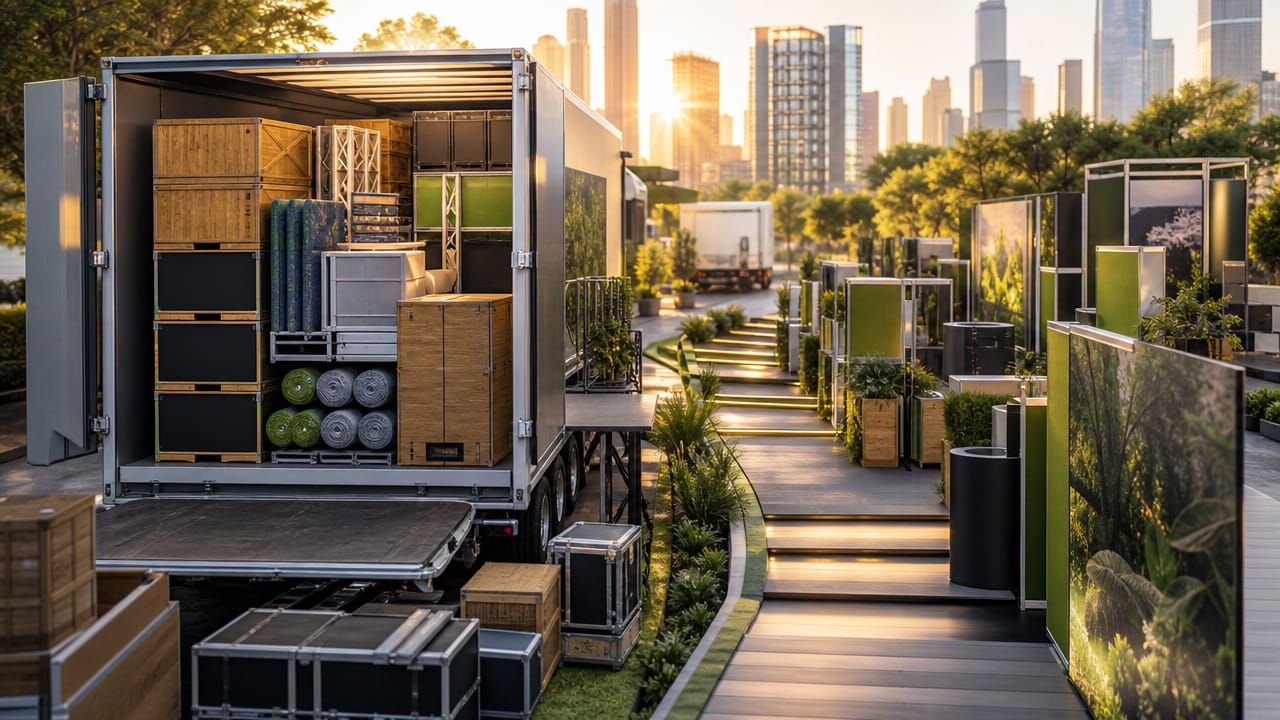
Use modular crates and road cases that match standard pallet sizes so they can be tightly packed in trucks and containers. Hollow components such as plinths or cabinetry are ideal for nesting smaller items, improving efficient packing for exhibition freight without adding extra pieces. Choose cartons that closely fit their contents and avoid unnecessary void fill, which wastes space and can crush under other loads. Keep individual carton weights within safe limits to support smooth venue loading dock logistics and reduce manual handling incidents.
Many exhibitors believe airfreight is always the safest option, yet for domestic shows, interstate exhibition freight services by road are often more cost-effective and flexible. With adequate lead time, road carriers can consolidate multiple stands, support return transport for trade show materials, and accommodate last-minute additions more easily. Another misconception is that more padding always equals better protection; instead, focus on correctly engineered cases and accurate documentation. Working with specialists in Exhibition Logistics and Freight helps you balance protection, cost, and reliability across your exhibition transport programme.
Before your next event, review your stand design, materials, and storage solutions for exhibition freight to identify long-term efficiencies. Consider modular builds, digital content instead of bulk brochures, and reusable cases that integrate with your preferred carriers. If you are unsure where to start, ask potential partners to explain their approach to trade show logistics, from pre-show planning to post-event storage. To better understand your options and refine your strategy, speak with a logistics expert who can tailor a step-by-step plan for your upcoming exhibitions.
Input your search keywords and press Enter.