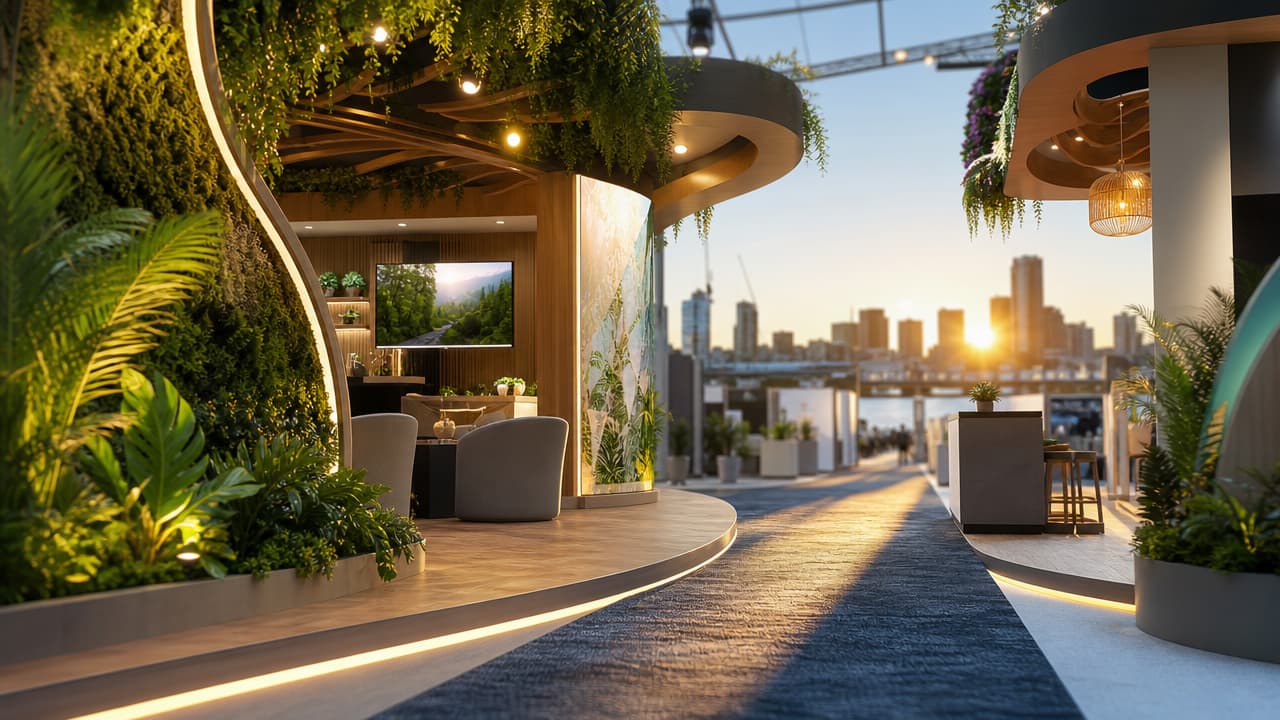



How to Incorporate Your Brand Story into Shell Schemes
On a busy Australian expo floor, your stand isn’t just a structure – it’s a live, three-dimensional chapter of your brand story.
How to incorporate your brand story into shell schemes is rapidly becoming a strategic priority for Australian exhibitors under pressure to justify event spend. Amid noisy aisles and tight schedules, attendees make split-second decisions about which stands deserve their attention. A clear narrative, grounded in customer problems and outcomes, cuts through the visual clutter and positions your business as relevant, focused and confident about its value.
Shell schemes may look generic at bump-in, but they are prime real estate for focused storytelling when treated as modular media assets. Instead of scattering messages, plan shell scheme displays as a sequential experience that moves from awareness to proof to action. This mindset shift elevates every surface from a passive backdrop to an active narrative device, aligning structure, messaging and behaviour around a single story.
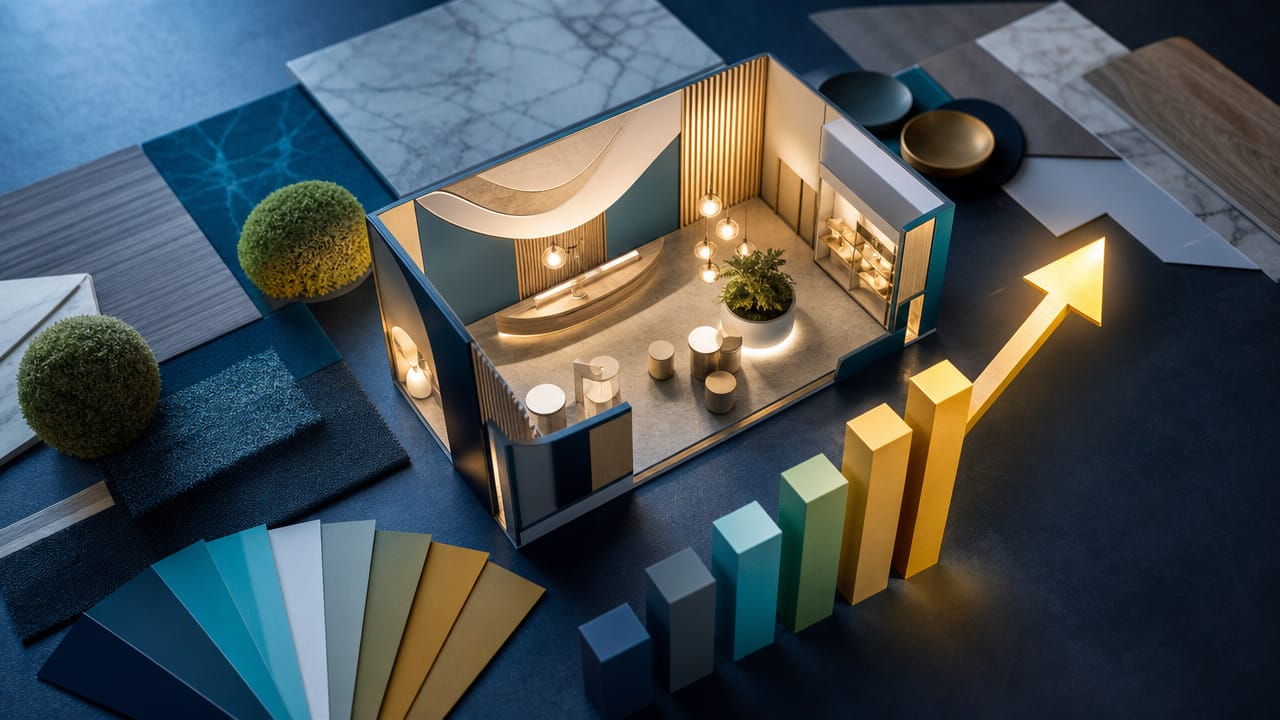
Consider the upper third of your walls as prime space for decisive shell scheme graphics that communicate who you are, what you do and for whom in under three seconds. A disciplined hierarchy of colour, headline and hero imagery reduces cognitive load and stops people in the aisle. Below that, use succinct copy, data points and product vignettes to build credibility, while a clearly marked demo or interaction zone sustains engagement and shapes the conversation.
To make your shell scheme booth work harder, apply a newsroom mindset: one key story angle per show, supported by no more than three proof themes. That discipline helps avoid cluttered layouts, inconsistent claims and last-minute “logo wallpaper”. Consider using branded shell scheme panels that can be reconfigured across events, giving you portable branding for shell booths while keeping narrative continuity over an annual show calendar.
Forward-thinking marketers are specifying story-led shell scheme walls instead of ad-hoc signage, using vertical panels to represent the customer challenge, solution and result. Compact product plinths, integrated screens and clear shell scheme backdrop graphics create depth without overwhelming limited footprints. When done well, even small shell booth storytelling can outperform larger, unfocused builds by feeling intentional, confident and customer-centric rather than opportunistic.
From a budget perspective, low-cost shell scheme makeovers often deliver better ROI than one-off custom builds, provided they are underpinned by a coherent narrative. Reusable modular shell scheme brand displays enable teams to iterate messaging as markets shift, without redesigning from scratch. Marketing leaders can encourage DIY shell scheme branding ideas within a strategic framework, then test variations in headline, imagery and layout to see which narrative choices drive dwell time, qualified conversations and faster follow-up momentum.
Ultimately, learning how to incorporate your brand story into shell schemes is about aligning environment, people and measurement. Brief staff to open conversations using the same storyline expressed on your walls, ensuring verbal and visual messages reinforce each other. After each event, review lead quality and engagement metrics alongside the specific story you told, not just your position on the floor. To lift future performance, scrutinise your current Shell Scheme Stands and commit to one sharper, more customer-centric narrative at your next show.
To explore more strategic approaches to shell scheme displays and event storytelling, review your upcoming show calendar and speak with an exhibition specialist about recalibrating your stand as a narrative-led brand asset rather than a last-minute fixture.
Input your search keywords and press Enter.