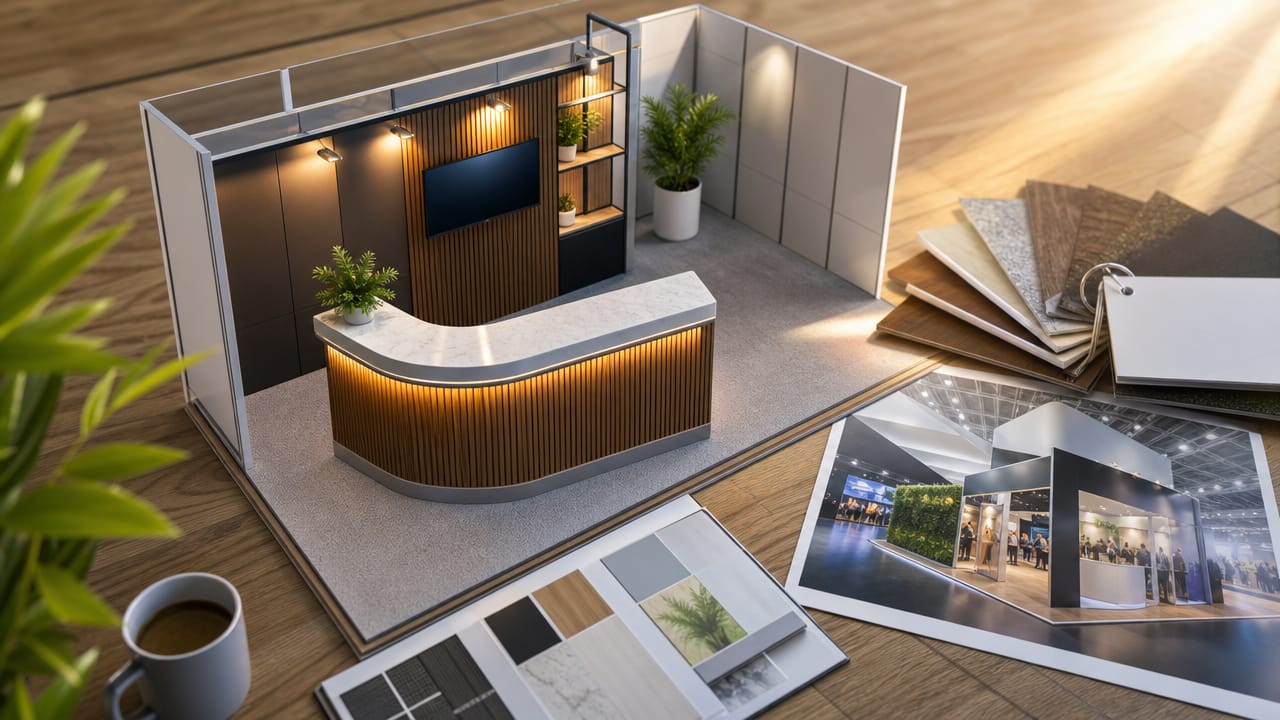



In Australia’s crowded trade show circuit, custom shell scheme counters are quietly becoming a defining factor in how effectively exhibitors use their space. From the Melbourne Convention and Exhibition Centre to ICC Sydney, visitors walk past hundreds of Shell Scheme Stands in a single day, making stand differentiation a serious challenge. When exhibitors rely on plain hire furniture, their presence can fade into a uniform backdrop, while a tailored counter becomes a visual anchor and a practical base for conversations and product demos.
The problem is that many brands still treat the counter as a commodity rather than a strategic component of shell scheme displays. A basic white box might seem harmless, yet it rarely aligns with brand colours, messaging, or the specific footprint of the stand. Over the course of a three-day expo, this mismatch can undermine professional perception, slow down interactions, and reduce the number of quality conversations your team can comfortably handle on the stand.
Standard hire counters are often chosen because they appear cheaper and quick to organise, but they come with subtle costs that only show up during bump-in and show hours. One common issue is poor fit: counters that are too large block the opening of a shell scheme booth, while those that are too small leave staff hovering awkwardly with laptops and brochures in hand. These layout compromises increase friction in visitor flow, making the stand feel cramped or confusing at peak times.
There is also a missed branding opportunity when counters are left uncustomised. Without shell scheme graphics or branded counter graphics, your team is essentially greeting prospects behind a blank canvas. Visitors scanning the aisle have to work harder to understand who you are and what you do, which is risky when attention spans are short. Over time, the lack of visual clarity contributes to weaker recall, even if the conversations themselves were strong.

Certain patterns on the show floor point to a counter problem rather than a staffing issue. If visitors hesitate at the boundary of your stand instead of stepping forward, your shell scheme reception counter may be acting as a barrier rather than an invitation. Staff forced to twist or step around boxes stacked on the floor, because there is no integrated counter and storage, quickly become fatigued and distracted during conversations.
Security and professionalism are additional concerns. Laptops perched on wobbly hire counters, tablets left exposed, and giveaways scattered across a compact counter for small booths all create visual noise. Photos taken for social media or post-event reporting can look cluttered and off-brand, masking the quality of your product with a messy backdrop. In many cases, these issues stem not from poor planning, but from treating the counter as a last-minute hire instead of designing it around your objectives.
For Australian exhibitors, the counter is often the first and last touchpoint in a visitor’s journey on the stand. When thoughtfully planned, a modular counter for shell stands can shape an intuitive visitor path, provide discreet storage, and host tablets or lead capture tools without cables snaking across the floor. This level of intention is rarely achieved when furniture is booked purely from a hire catalogue a week before the show.
Smaller businesses, in particular, may assume they must choose between design and practicality, experimenting with DIY counter ideas for exhibitions that do not quite meet venue guidelines or accessibility requirements. Others rely on a portable counter for shell booth use that lacks the stability or storage capacity needed for busy events. Over multiple expos, these compromises add up to more staff stress, slower service, and fewer leads converted from casual interest into genuine opportunities.
When these warning signs appear consistently, it is a cue to reassess the role your counter plays in overall stand design. Many exhibitors find that exploring custom shell scheme counters opens up new layout options, including angled units that guide foot traffic, or split counters that support separate demo and reception zones. Even modest changes to counter height or footprint can transform how confident and prepared your team feels when the doors open each morning.
Before booking your next event, review photos and floor plans to see whether your existing counter setup truly supports your objectives. Consider whether a more intentional approach to counter design could improve branding, storage and workflow, and help your team welcome visitors with confidence. If the current arrangement is causing clutter, hesitation or missed leads, speaking with an exhibition specialist about tailored counter solutions is a practical next step that can lift the performance of your trade show marketing without dramatically increasing your budget.
Input your search keywords and press Enter.