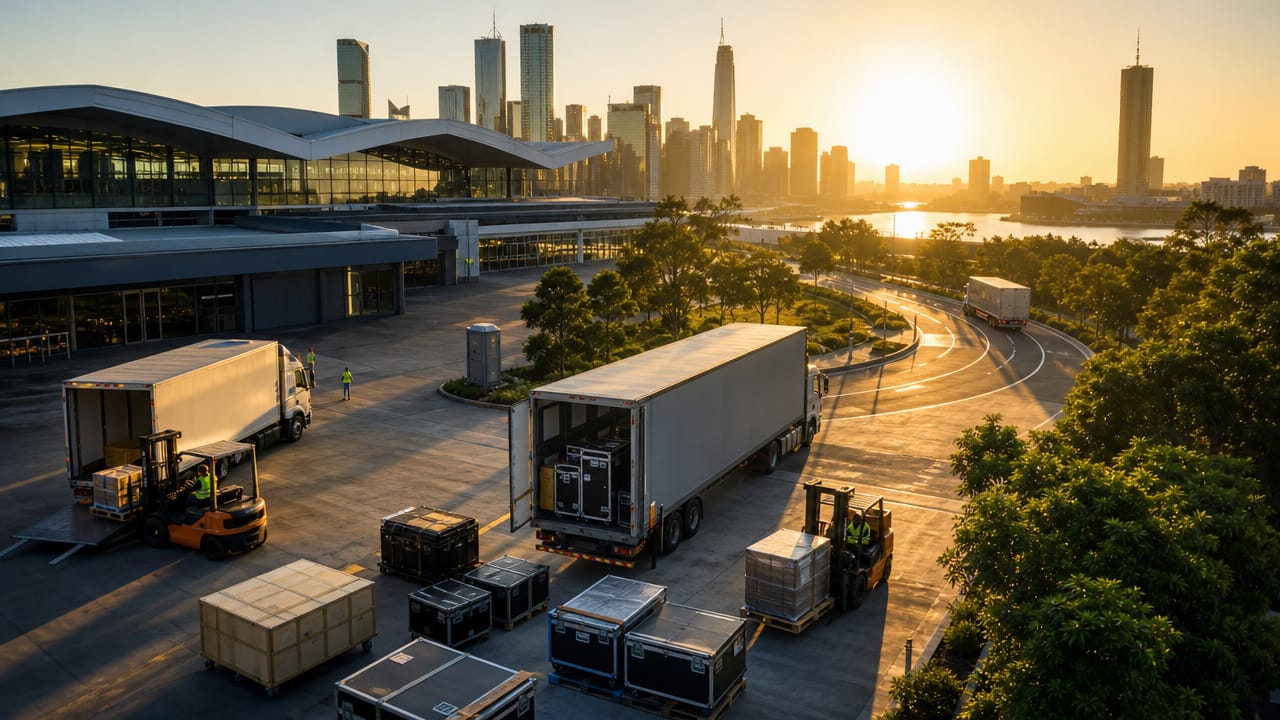
Understanding delivery schedules for trade show logistics in Australia starts with clear planning, realistic lead times, and tight coordination between exhibitors, venues, and carriers. When Exhibition Logistics and Freight partners are involved early, they can map inbound and outbound moves around venue rules, public holidays, road restrictions, and airline cut-offs. That planning underpins reliable exhibition freight flows into complex sites like ICC Sydney, Melbourne Convention and Exhibition Centre, and Brisbane Convention & Exhibition Centre.
Specialist providers typically blend four core delivery models to suit different risk profiles and budgets. Direct-to-venue suits local exhibitors with simple booth builds, but depends heavily on strict venue access windows for exhibitors and limited loading dock capacity. Advance warehouse models move freight into a depot days or weeks earlier, giving buffer against delays and allowing staged delivery to the show floor. Consolidated freight groups multiple stands into shared linehaul or sea freight, lowering cost per cubic metre but requiring disciplined delivery timelines for exhibition freight. International shipments add layers of customs clearance, biosecurity inspection, and terminal handling, often demanding even earlier cut-offs and robust documentation.
Inbound schedules usually start with planned logistics for show setups that separate bulky stand builds, AV, and product samples into time-banded slots. In Melbourne and Sydney, organisers may mandate marshalling yards where trucks check in, queue, then are called to the dock to prevent gridlock. On site, material handling (or drayage) contractors control forklifts and pallet jacks, sequencing moves from dock to stand and back again after show close. Outbound, providers plan return transport after exhibitions with pre-booked truck and airfreight capacity so freight is cleared quickly and late collections do not incur overtime or storage penalties from venues.
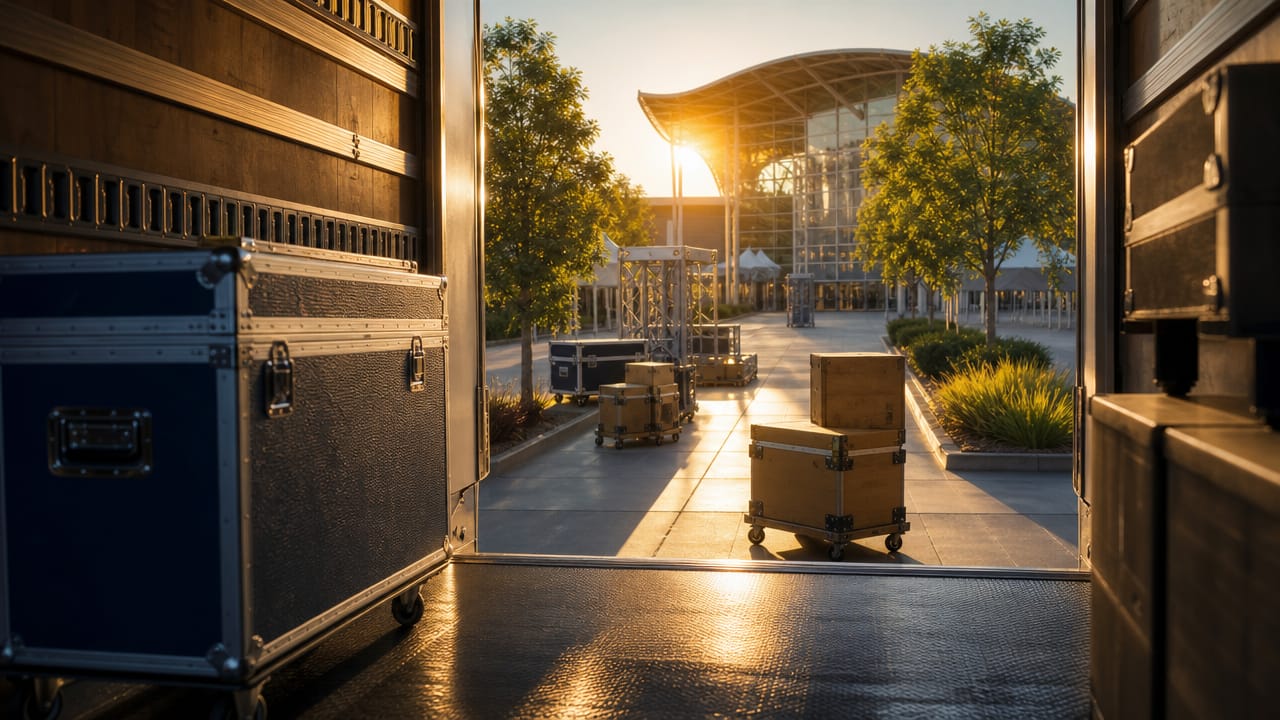
Larger organisers sometimes coordinate exhibition transport themselves, particularly for smaller conferences or repeat events in a single city. This can work where freight volumes are modest, venue rules are familiar, and time-sensitive trade show deliveries are limited to a few key consignments. However, once you add interstate event freight delivery, international exhibitors, or overlapping move-in and move-out days, specialist trade show logistics firms bring tested playbooks, systems, and on-site teams. They also negotiate off-peak delivery options for expos, integrate tracking technology, and manage risk through contingency plans such as secondary carriers, backup storage, and rerouting in case of weather or industrial action.
When comparing options, exhibitors should weigh cost, reliability, and environmental impact alongside service scope. Self-managed trade show logistics can appear cheaper, but missed slots, demurrage, and re-deliveries quickly erode savings. By contrast, a specialist able to coordinate exhibition transport schedules across multiple carriers may reduce risk and carbon emissions through smarter routing and consolidation. For complex events, engaging experts six to twelve weeks out allows schedule design that balances budget with resilience, especially for regional and remote shows.
Ultimately, the right delivery schedule is the one that protects your stand opening time at a justifiable cost. Clarify your inventory, build sequence, and risk appetite, then choose between direct, warehouse, consolidated, or fully managed models accordingly. If you are planning a new or larger event, or juggling multiple cities, speak with an Exhibition Logistics and Freight specialist early to stress-test your plan, model contingencies, and lock in realistic lead times. Now is the time to review your upcoming show calendar, compare logistics approaches, and book a consultation to design a schedule that keeps your Australian exhibitions running on time and on budget.
Input your search keywords and press Enter.