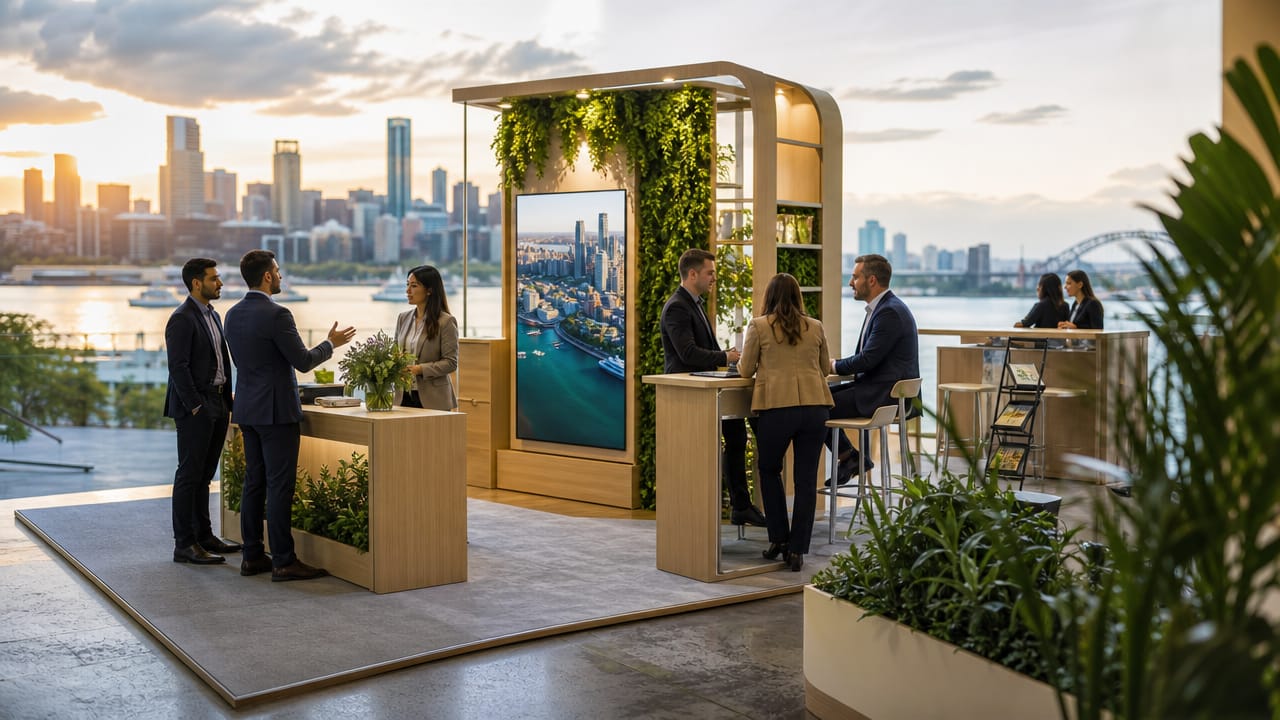



Designers and marketers working with small stands at venues like ICC Sydney and the Melbourne Convention and Exhibition Centre face a growing challenge: every square metre must justify its cost. When Exhibition Stand Design is left to the last minute, compact spaces are often filled rather than planned, leading to cluttered visuals, awkward layouts and missed conversations. The problem is less about stand size and more about how effectively each element supports attention, movement and meaningful engagement.
Research suggests exhibitors have only a few seconds to catch the eye of passing visitors, a window that shrinks further when the stand feels cramped or confusing. Poorly considered exhibition booth design can leave time-poor delegates unsure where to look first, or whether they’re even welcome to step in. Overloaded graphics, long product lists and mismatched branding all compound this effect, making the stand feel busy to staff but almost invisible from the aisle.
Common issues emerge repeatedly across Australian trade shows, particularly for brands relying on generic or reused layouts. Visitors pause at the boundary, unsure of the entrance, or simply skirt past because counters and chairs block natural paths. Staff constantly shuffle aside to let people through, a clear indication that visitor flow in tiny exhibition spaces has not been properly mapped. When important messages are buried at knee height or hidden behind people, it’s a sign that vertical planning has been overlooked.

Many exhibitors assume limited floorspace means they must sacrifice impact, when the real issue is small footprint exhibition stand design that treats space as a container, not a strategic tool. Over-reliance on brochure racks, bulky furniture and low signage quickly eats up circulation space and sightlines. Missed opportunities include modular small exhibition booths that adapt to different venues, or space-saving custom booth concepts that integrate storage, demonstrations and lead capture into fewer, smarter components.
When these patterns repeat across an annual events calendar, the cumulative cost becomes hard to ignore. Brands miss out on enquiries while neighbouring custom exhibition stands with similar footprints feel open, clear and purposeful. Simple australian small stand design tips, such as planning corner stand layout ideas from the aisle inward or trialling compact trade show booth layouts before build, can reveal how much engagement is lost to unexamined habits. At this point, seeking expert Exhibition Stand Design guidance becomes less about aesthetics and more about protecting future return on investment.
Before your next show lock-in, review previous photos, lead volumes and staff feedback with a critical eye. Look for recurring bottlenecks, dead zones and messages that never appear in crowd shots, then consider whether fresh exhibition stand ideas or more modular planning could prevent the same issues repeating. A short consultation with specialists experienced in local venues can help you identify practical, space-efficient solutions that align with your objectives. Taking stock now is often the simplest way to ensure your next event budget works harder, not just larger.
Input your search keywords and press Enter.