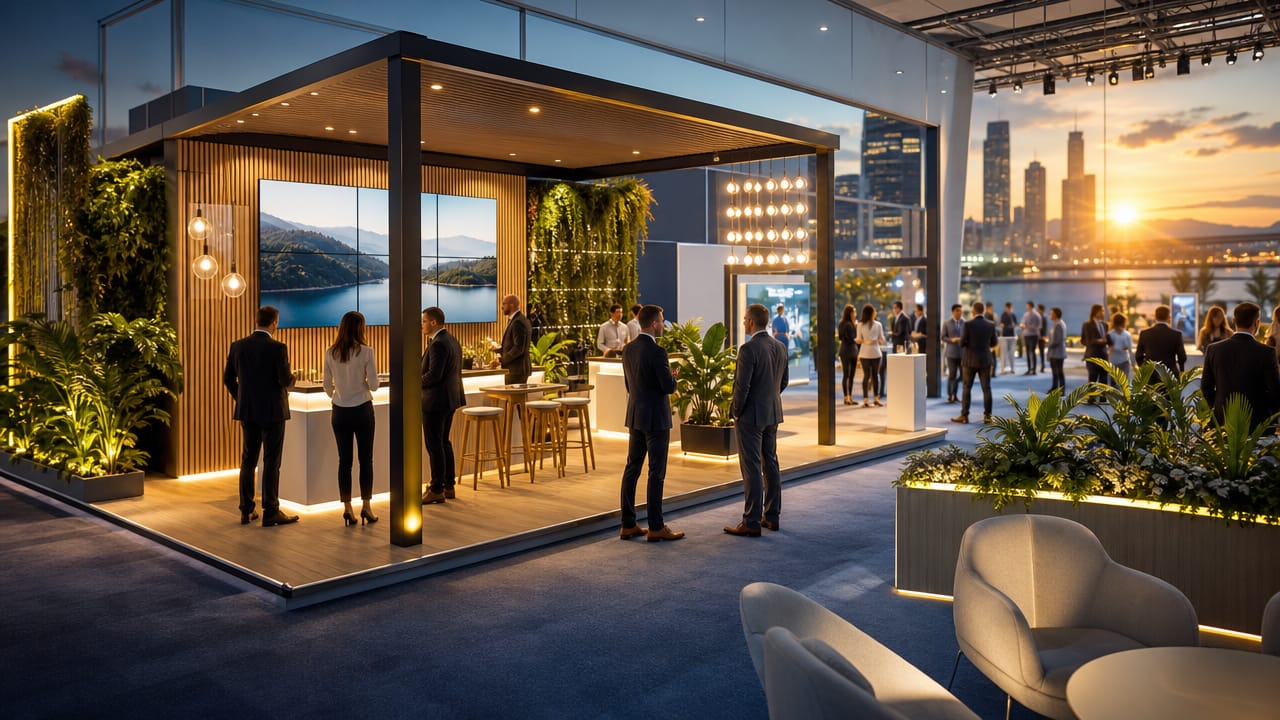



The importance of visual merchandising in exhibition stands is growing as Australian trade shows become more competitive and fast paced. In just a few seconds, visitors decide whether to stop or keep walking, so your stand must communicate its purpose clearly and confidently. A strategic visual merchandising plan helps you align design, messaging, and product presentation with your brand and commercial goals, rather than relying on decoration alone.
Visual merchandising for exhibition stands focuses on how layout, graphics, lighting, and hero products work together to attract the right audience. When integrated with Exhibition Stand Planning, it ensures your space supports lead generation, sales conversations, and demonstrations. This approach goes beyond colour and style to consider sightlines, visitor flow, and how quickly your key benefits can be understood. For many businesses, refining these elements can significantly increase meaningful enquiries.
For Australian exhibitors, visual merchandising must also respond to venue rules, safety standards, and australian trade show requirements. Start by clarifying trade show stand objectives, such as launching a product or booking meetings, then design your stand so these goals are obvious from the aisle. Prioritise one or two focal points, ensure branding is visible above head height, and keep around 40 per cent of the floor area open to avoid congestion and clutter.

Effective exhibition stand layout planning starts with how visitors enter, move through, and exit your space. Techniques such as exhibition visitor journey mapping help you place hero products, demo zones, and meeting areas where they are naturally discovered. Keep key messages at eye level or above and avoid text-heavy panels that are hard to read from a distance. A simple exhibition planning checklist can help you confirm each wall, counter, and screen has a clear role.
Consider a software company launching a new platform. Their trade show preparation might include a large central screen for demos, a concise message outlining benefits, and seating that encourages longer conversations. Before the event, pre-show stand preparation should cover lighting tests, sample scripts, and an exhibition stand staffing plan so every shift is covered. Many teams also use a visual merchandising checklist and exhibition planning timeline to ensure graphics, samples, and technology are ready on schedule.
For your next event, review how your current stand performs against these principles and identify gaps. Ask whether visitors can instantly see what you do, why it matters, and where to go next within your stand. If not, refining your visual merchandising in exhibition stands could significantly improve engagement and lead quality. To deepen your understanding and make more informed design decisions, consider speaking with an exhibition specialist who can review your concept and suggest tailored improvements.
Input your search keywords and press Enter.