



Tips for collaborating with vendors during Exhibition Stand Planning start with recognising that suppliers are now strategic partners, not just order‑takers. As Australian exhibitions rebound, brands juggling compressed lead times, stricter venue rules, and escalating visitor expectations need structured, insight‑led collaboration. The goal is to turn operational reliability into a creative and commercial edge, underpinned by clear briefs, robust governance, and shared accountability across every stage of your exhibition planning timeline.
High‑performing exhibition teams treat vendors as an extension of their own marketing and operations capability, not as interchangeable suppliers.
With trade show preparation ramping up across Australia, the show floor is noisier, more digital, and more time‑poor than before. Brands that orchestrate vendors around shared commercial outcomes, rather than isolated tasks, secure better design thinking, smoother delivery, and more resilient contingency planning. This shift demands more than a basic exhibition planning checklist; it requires aligning partners on audience intent, success metrics, risk appetite, and sustainability expectations from day one.
Expert teams begin with a robust supplier briefing guide that goes beyond dimensions and logos to articulate decision rights, constraints, and trade‑offs. A disciplined vendor communication plan, structured around a single project hub, gives everyone access to the same drawings, approvals, and risk logs. Pair this with milestone‑driven exhibition supplier deadlines and you replace reactive firefighting with predictable execution, even when freight routes change or venues reconfigure access.
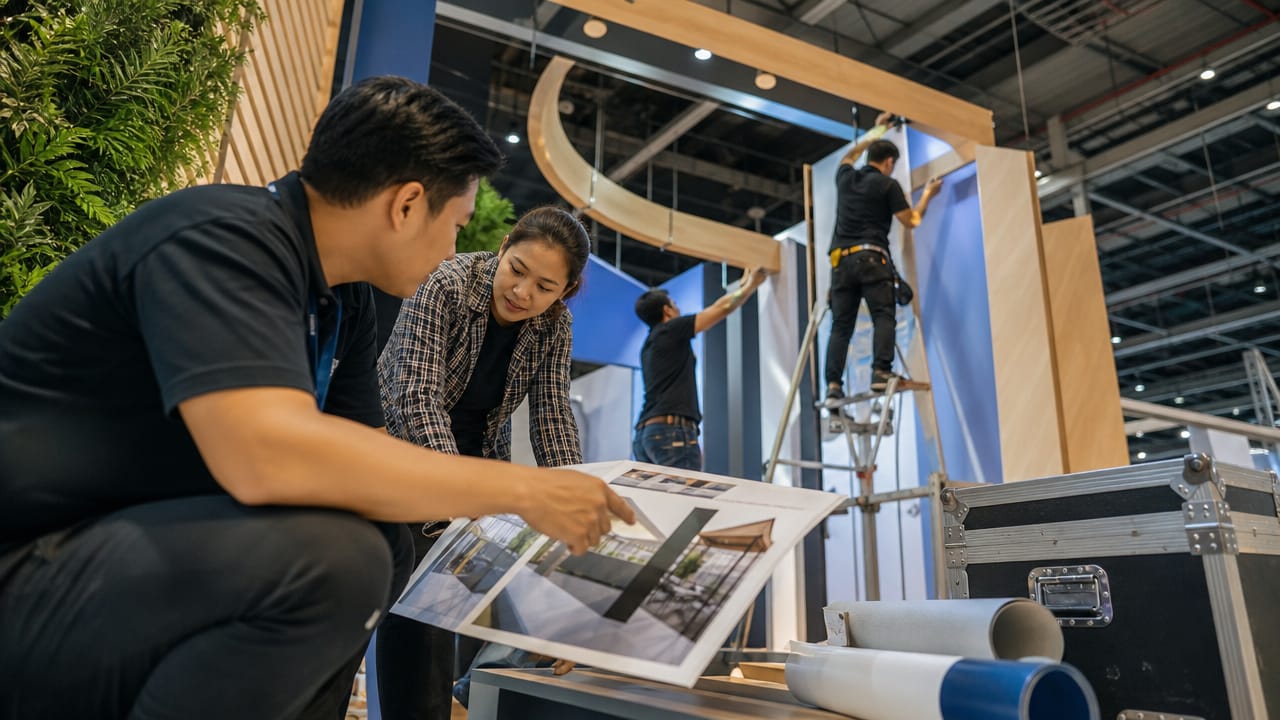
Pre-show vendor planning is the moment to invite ideas, not just quotes. Ask builders, AV teams, and logistics partners what they are seeing work across comparable Australian shows, from modular systems to coordinating stand services in multi‑city programs. A disciplined vendor coordination checklist can surface opportunities to reuse components, streamline pack‑in, or consolidate services, freeing budget for higher‑impact engagement like live demos or hosted buyer hospitality.
Managing exhibition partners effectively also means planning for disruption. Build buffers into your trade show vendor schedule and agree escalation paths, including who can approve on‑the‑spot changes onsite. After each event, debrief jointly on what strengthened ROI and what slowed execution, then refine your internal exhibition planning checklist accordingly. Over time, this transforms ad hoc shows into a repeatable portfolio strategy, supported by vendors who understand your brand, data requirements, and appetite for innovation.
To leverage these advantages, review your current Exhibition Stand Planning approach and identify where governance, data, or collaboration gaps are costing you impact. Engage key vendors early, share your multi‑show roadmap, and challenge them to co‑design smarter ways of working. The brands that win the next wave of Australian exhibitions will be those that treat vendor ecosystems as a strategic capability—starting with one carefully structured event and scaling the model from there.
Ready to sharpen your next exhibition program? Take time this week to map your vendor communication plan, clarify decision rights, and align partners around measurable outcomes, then brief your internal team and suppliers before your next stand goes into design.
Input your search keywords and press Enter.