



Creating a Trade Show Playbook for First-Time Exhibitors in Australia is one of the most effective ways to ensure your first event delivers measurable outcomes instead of guesswork. A clear, written process turns a single exhibition into a repeatable activity that can be refined over time. Your playbook should outline how you plan, execute, and review every stage of your participation, from early budgeting to post-event reporting and improvement.
For new exhibitors, the bustle of a major Australian event can be overwhelming without a structured approach. A trade show playbook explains who your ideal visitors are, what problems you solve, and how your stand team should communicate this consistently. It should also define success metrics so you can begin measuring trade show ROI rather than relying on vague impressions. This foundation helps you decide which opportunities to pursue and which to ignore on a busy show floor.
Start by setting clear objectives, such as qualified meetings, proposals issued, or direct sales, and link each objective to simple numbers. Next, define your target audience, key messages, and core offers so your exhibition marketing materials and conversations all align. Build a realistic timeline that includes space booking, stand design approvals, freight, and insurance requirements typical of venues like ICC Sydney and Melbourne Convention and Exhibition Centre. Include budget ranges for design, staffing, and trade show promotion to avoid late surprises.
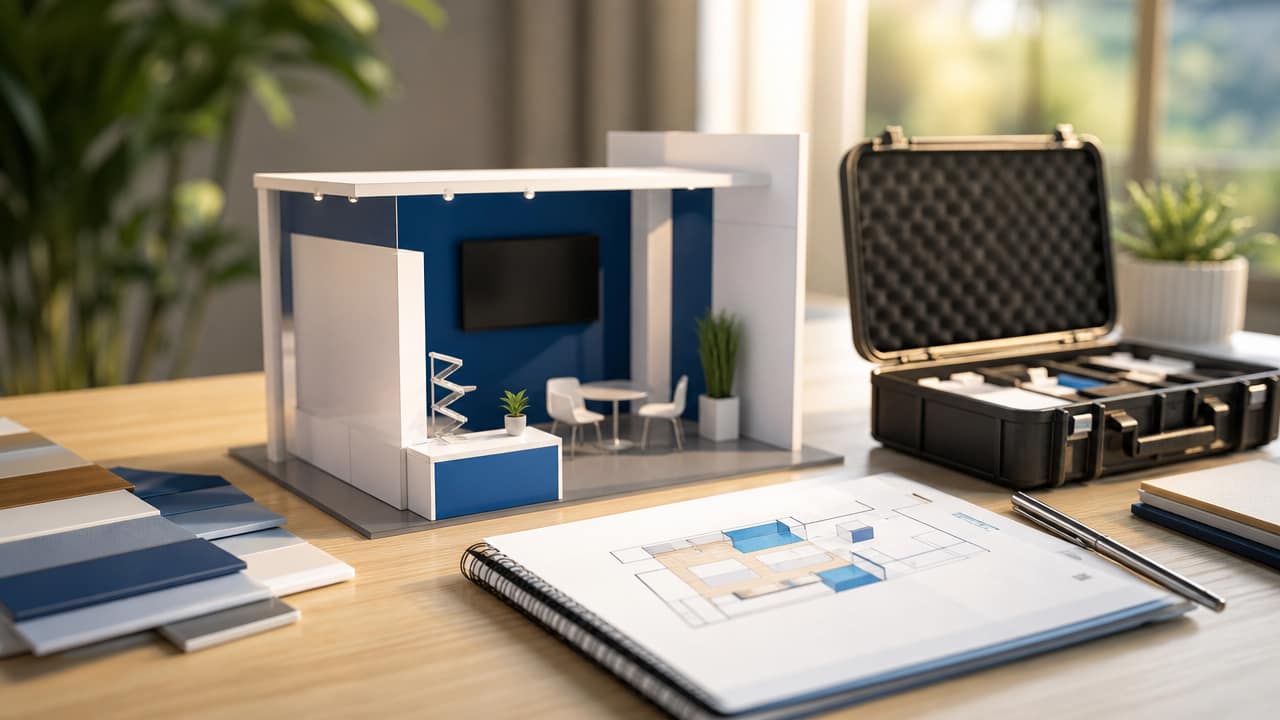
Your stand layout should make it easy for visitors to stop, understand what you do, and start a conversation within a few seconds. Plan open entrances, clear signage, and a focal demo or product area, along with a quieter space for serious buyers. Document booth staff engagement tips covering greetings, body language, and how to handle multiple visitors at once. Add a simple checklist for local rules on power, rigging, signage heights, and public liability insurance to stay compliant.
An effective playbook assigns clear roles so no task is neglected during busy periods. One person might focus on trade show visitor engagement, another on demonstrations, and a third on qualifying buyers. Provide short scripts with question prompts, and outline exhibition lead capture strategies using badge scanners, tablets, or paper forms. Consider which exhibition lead generation tools integrate with your CRM to streamline follow-up. This structure supports stronger exhibition lead generation and fewer missed opportunities.
Post-show, your playbook should detail how and when leads are contacted, by whom, and with what messages. Map out post-event lead nurturing sequences including thank-you emails, call scripts, and meeting summaries that align with Australian business expectations for timely, professional responses. Include guidance on pre-show exhibition marketing tactics and trade show promotion ideas so each event improves on the last. Finally, review your results, refine your Trade Show Marketing approach, and update the playbook so your next exhibition is more focused and effective.
Input your search keywords and press Enter.