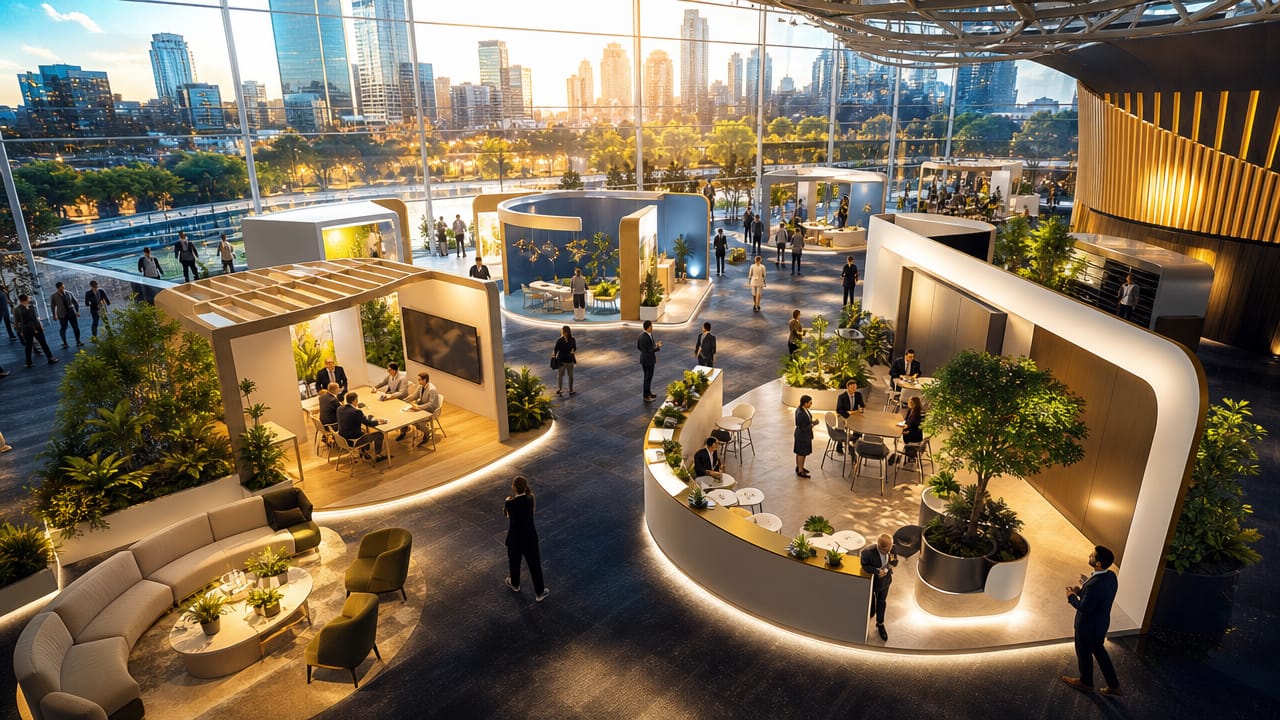



The Role of Furniture: Enhancing Functionality in Exhibition Spaces
Thoughtful furniture is no longer a backdrop in Australian exhibitions; it is a strategic tool that shapes movement, engagement, and commercial outcomes.
Across Australian museums, galleries, and trade fairs, furniture has shifted from finishing touch to core infrastructure. When Exhibition Stand Design is planned in parallel with seating, counters, and storage, venues see smoother circulation and clearer storylines. Modular benches, lightweight stools, and integrated display tables are critical to functional exhibition stand layouts that guide visitors without feeling prescriptive. This design discipline is as relevant to cultural institutions as it is to brands investing in exhibition booth design for competitive sectors like technology, tourism, and advanced manufacturing.
The era of heavy, immovable cabinetry is ending as agile programs demand rapid changeovers. Curators and event managers now favour modular custom stand solutions that can be reset overnight for new audiences, from school groups to corporate delegations. Adjustable-height tables, nesting stools, and mobile charging hubs support workshops in the morning, networking in the evening, and public programming on weekends. When paired with product-focused display stands and carefully considered lighting for exhibition booths, this adaptability stretches capital budgets while protecting design integrity.
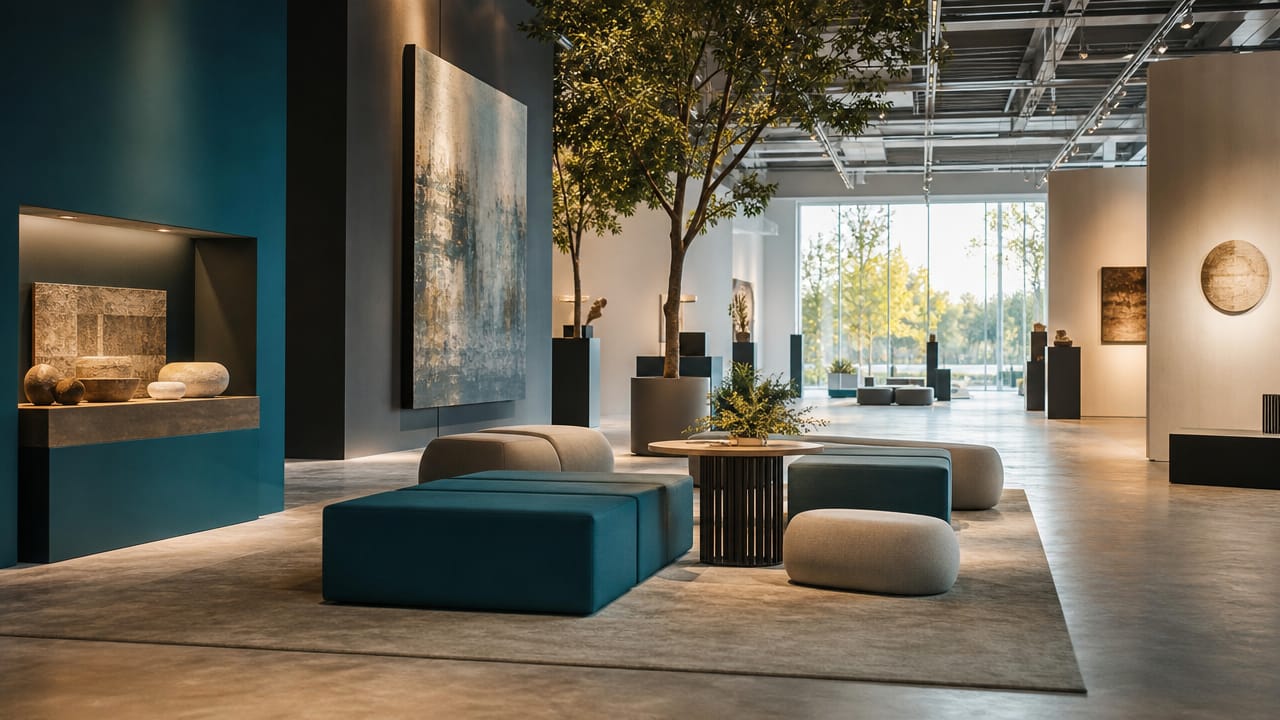
Furniture is a frontline accessibility and inclusion tool, not a compliance afterthought. Varied seat heights, backs and armrests, and generous wheelchair clearances enable visitor-friendly booth flow for people of all ages and abilities. The most effective open plan exhibition spaces also use furniture to provide moments of privacy, cultural safety, and sensory respite. For commercial exhibitors, considered choices in finishes and forms reinforce branded custom stand graphics, turning lounges, counters, and plinths into extensions of the brand story rather than neutral props.
Strategic leaders increasingly view furniture as part of a five-year portfolio, not a single-event expense. They ask how pieces will support digital interactives, interactive demonstration booth design, and evolving sustainability benchmarks. The same furniture kit should flex from custom exhibition stands at trade expos to more reflective environments in cultural venues, with minimal waste. Teams that prototype exhibition stand ideas at full scale, observe behaviour, and refine layouts gain deeper insight into what keeps visitors engaged, comfortable, and willing to explore.
Now is the time to audit how furniture performs across your exhibition program. Map where fatigue, congestion, or underused zones occur, and test new arrangements that prioritise comfort, clarity, and intuitive movement. Use those insights to brief designers and fabricators on furniture that genuinely supports future-ready experiences. To take the next step, convene a cross-functional workshop and define a furniture strategy that aligns with your organisational goals, budget, and audience expectations, then review it annually as your exhibitions evolve.
Input your search keywords and press Enter.