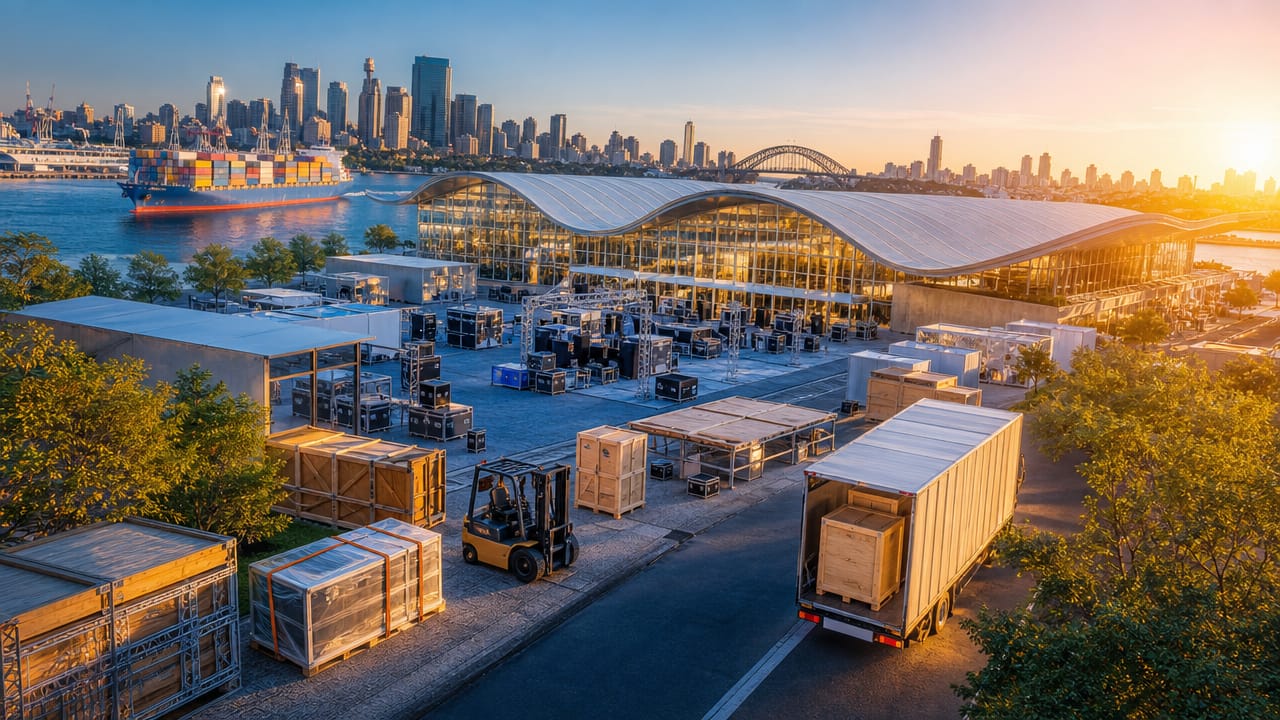



Exhibition freight is rapidly becoming one of the biggest line items – and risks – for Australian exhibitors heading into 2026. With tighter budgets, tougher sustainability expectations and congested venues, organisers need smarter ways to move stands, AV and samples without blowing timelines. These 7 ways to streamline your exhibition freight process for 2026 focus on planning, visibility and specialist support that protect both your stand and your sales pipeline.
Before you book a truck or crate a display, document every step from warehouse to stand and back. Include handover points, venue loading dock access rules, customs checks and bump-in windows for major centres like ICC Sydney, MCEC and BCEC. This reveals hidden choke points early and supports better trade show freight scheduling. Use this map to set realistic internal deadlines and align suppliers on who is responsible at each stage.
By 2026, manual status updates simply won't cut it. IoT trackers and cloud platforms now give live location data, temperature readings and digital proof of delivery for exhibition freight. Shared dashboards mean marketing, operations and on-site teams see the same information, cutting panicked phone calls. Look for providers who integrate alerts when freight is delayed, diverted or held at customs so you can adjust stand builds or staffing on the fly.
Mixed crate sizes, improvised pallets and handwritten labels invite delays and damage. Standardise cases, ensure they are stackable and clearly label each piece with hall, stand number and contact details for on-site exhibition freight handling. Include simple repack instructions inside each case so local crews can safely dismantle and reload. This becomes critical when you rely on interstate exhibition transport services for a tight show-to-show turnaround.
Australian venues and sponsors are increasingly scrutinising carbon footprints and waste. Shift to reusable crates, lighter materials and consolidated loads to cut emissions and costs. Ask potential partners how they measure impacts and whether they can offer greener exhibition transport options such as electric last-mile delivery or rail. Sustainable choices now are likely to become mandatory requirements for premium floor space allocations in coming years.
Paperwork errors still derail otherwise strong exhibition freight planning tips. International exhibitors must navigate temporary import rules, biosecurity checks and product certifications. Centralise documentation and keep digital copies accessible to customs brokers and site managers. Specialist providers in trade show logistics can flag risky items early, from timber packaging to lithium-powered displays, reducing the chance of last-minute holds that compromise your stand build.
To keep sales and marketing outcomes on track, align your transport schedule with product launches, demos and media calls, not just venue dates. Coordinating exhibition transport suppliers under one point of contact makes it easier to manage risks and maintain consistency across cities. Many Australian organisers are consolidating to a single Exhibition Logistics and Freight partner for multi-show programs to gain data insights, stronger accountability and sharper pricing.
If your team has a major 2026 program ahead, now is the time to review providers, test response times and lock in capacity before peak periods. A specialist partner can manage exhibition transport, on-site crews and compliance while you focus on leads, meetings and brand presence. Enquire today to benchmark your current setup, identify gaps and secure a tailored logistics plan that keeps your next exhibition schedule, budget and reputation firmly under control.
Input your search keywords and press Enter.