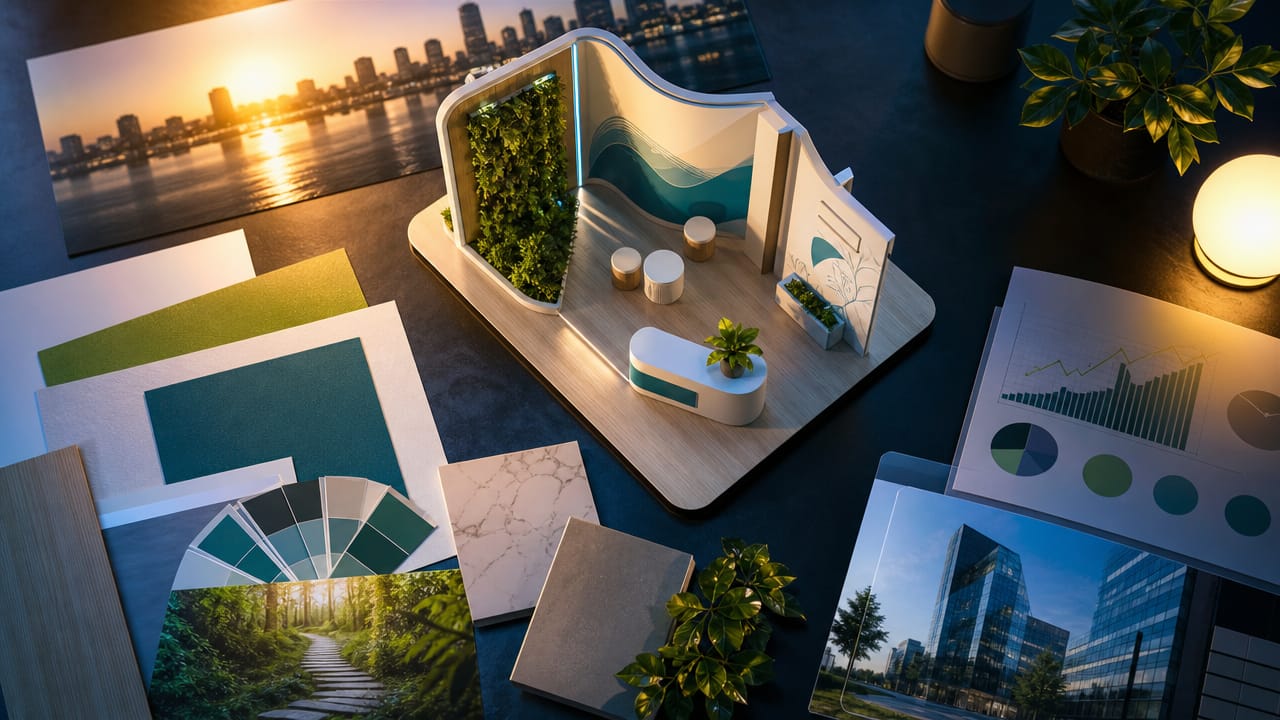



Visual Storytelling: How to Convey Your Message Through Design is rapidly becoming a priority for Australian exhibitors under pressure to stand out in crowded halls. Visual storytelling uses imagery, structure and motion to turn your stand into a clear, fast-reading narrative that visitors can understand in seconds. Rather than relying on dense copy, the approach focuses on how people move, what they notice first and which details help them decide to step closer. For brands balancing limited budgets with ambitious growth goals, this method offers a practical way to turn abstract value propositions into tangible, memorable experiences.
In an exhibition setting, visual storytelling starts with a single strategic message, then builds everything else around it. Well-planned exhibition booth design considers how headlines, imagery, product zones and digital content work together to answer three questions: who you are, what you do and why it matters. Clear hierarchy ensures visitors can scan from a distance, then discover proof points as they approach. For time-poor attendees, a visually led narrative can make complex services or technologies feel accessible, helping your team start more focused conversations.
The commercial stakes are high when every square metre of floor space must justify its cost. When executed well, visual storytelling in Exhibition Stand Design can lift dwell time, prompt questions and increase the number of qualified leads you meet. Instead of generic visuals, brands are deploying industry-specific stand concepts that mirror the environments, challenges and opportunities their customers recognise. This targeted approach builds trust, positioning your organisation as tuned into sector realities rather than talking in broad marketing slogans.

For brands seeking practical solutions, visual storytelling can be delivered through several design pathways. Modular systems suit open plan trade show stands where flexibility and easy reconfiguration between cities are essential. Businesses seeking a premium presence often explore custom exhibition stands that integrate immersive exhibition stand graphics, product showcases and hospitality zones into one cohesive space. For growing companies, hybrid builds combine reusable frames with refreshed cladding and digital content, providing impact without rebuilding from scratch every season.
Choosing the right approach comes down to objectives, lifecycle and market expectations. Technology and healthcare brands, for example, often need educational storytelling using motion graphics and clear information panels. Consumer goods exhibitors may lean harder on tactile experiences and interactive elements that encourage trial. Australian custom stand design specialists can help balance ambition with logistics, advising on storage, transport and reuse over a multi-year program. For teams under time pressure, partnering with experts simplifies decisions on materials, structure and lighting while keeping the narrative sharp.
For many organisations, the next step is to translate strategy into a concrete plan that connects content, structure and budget. A consultative discussion with a design partner can clarify whether you need a fully bespoke build, a modular refresh or a targeted update to graphics and layout. This is where professional guidance on exhibition stand ideas, technology integration and traffic flow becomes critical to performance. If you are planning your next Australian event, now is the moment to map your visitor journey, define your key messages and speak with an expert to compare options and design a stand that tells your story with clarity and intent.
Input your search keywords and press Enter.