



Budgeting for Australian trade shows has shifted from a simple allocation to a complex financial decision. With freight volatility, labour and installation charges, and venue surcharges all rising, Exhibition Stand Costs now demand board-level scrutiny. Marketing and finance leaders need to treat each show as an investment decision, not a branding exercise. That means understanding cost drivers in detail, challenging legacy assumptions about “what a stand should look like”, and linking spend directly to pipeline impact. Forward-thinking teams are reframing exhibition stand pricing as a portfolio of bets that must earn their place in the budget.
In the current climate, every square metre of stand space should be justified by the value of conversations it can create, not by tradition or ego.
Post-pandemic, many Australian brands are attending fewer events but raising expectations for each trade show budget. Finance teams now require real-time visibility across logistics, stand build, travel, and on-stand activation. Basic spreadsheets cannot keep up with last-minute supplier changes, rebooked freight, or shifting dollar movements. Integrated expense tools and project management platforms provide a single source of truth, enabling faster approvals and clearer accountability. This discipline is essential not only for controlling trade show expenses, but also for defending spend when CFOs scrutinise marketing’s contribution to revenue.
The leading exhibitors are going beyond simple exhibition stand budget planning and moving into scenario-based modelling. Cloud planning tools allow teams to test multiple floorplans, staffing levels, and activation concepts before committing capital. For example, marketers can run a custom stand cost comparison between a premium corner site and a smaller inline stand with higher digital investment. By linking each scenario to forecast lead volume, deal size, and conversion rates, decision-makers can quickly see which mix of spend is most likely to drive commercial outcomes.
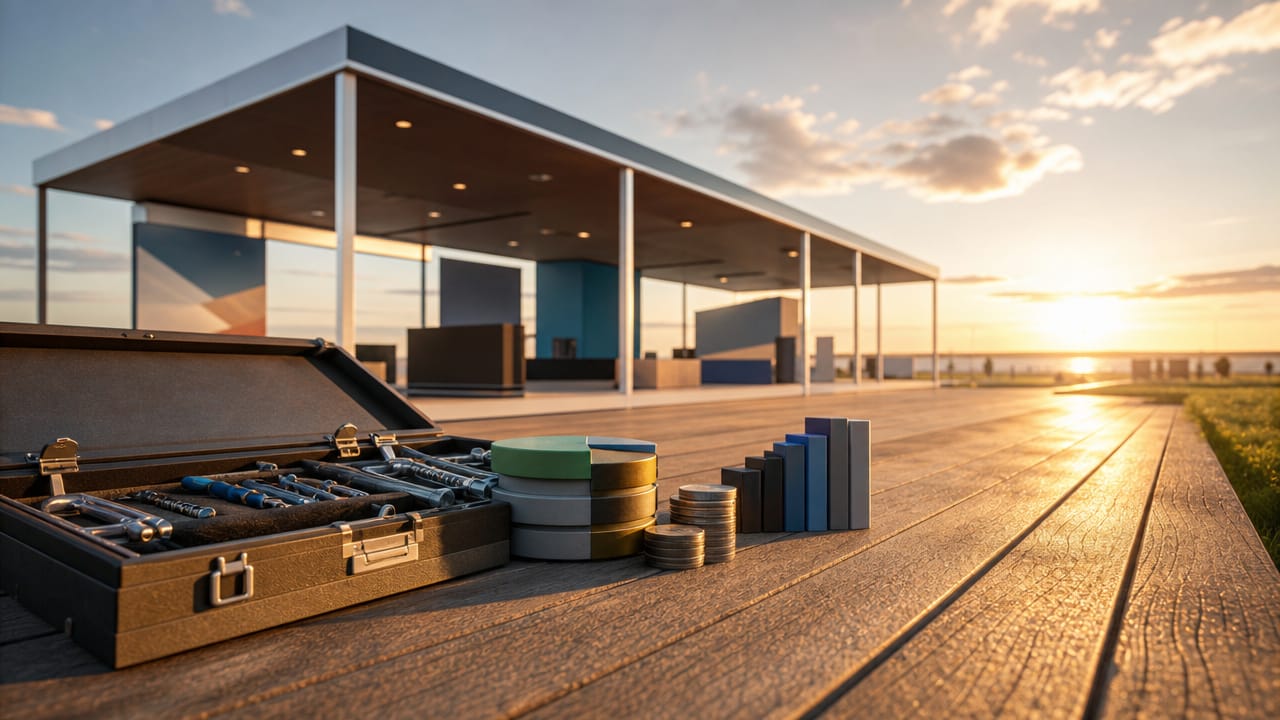
A true thought-leadership approach to budgeting for exhibition stands treats every show as an experiment that sharpens the next investment. Teams that capture actuals within days of bump-out can benchmark venues, stand sizes, and formats over time. This makes it easier to compare exhibition stand quotes, negotiate with suppliers, and identify value for money exhibition stands across different markets. Over several event cycles, these insights evolve into a playbook that codifies best practice and de-risks future spend.
The strategic challenge now is not merely to gather more data, but to use it to reframe internal conversations about risk and return. Australian exhibitors who base decisions on rigorous trade show cost breakdown analysis can shift the dialogue from “How much did we spend?” to “What did this stand contribute to pipeline and customer relationships?”. Exhibitors who embrace this mindset will be better placed to secure budget, secure sharper exhibition stand quotes, and demonstrate consistent ROI in a competitive events landscape. To reassess your current approach, review your last year of show performance and ask whether your budgeting model truly reflects how modern exhibitions drive growth—then speak with an experienced events partner to refine your next strategy.
Input your search keywords and press Enter.