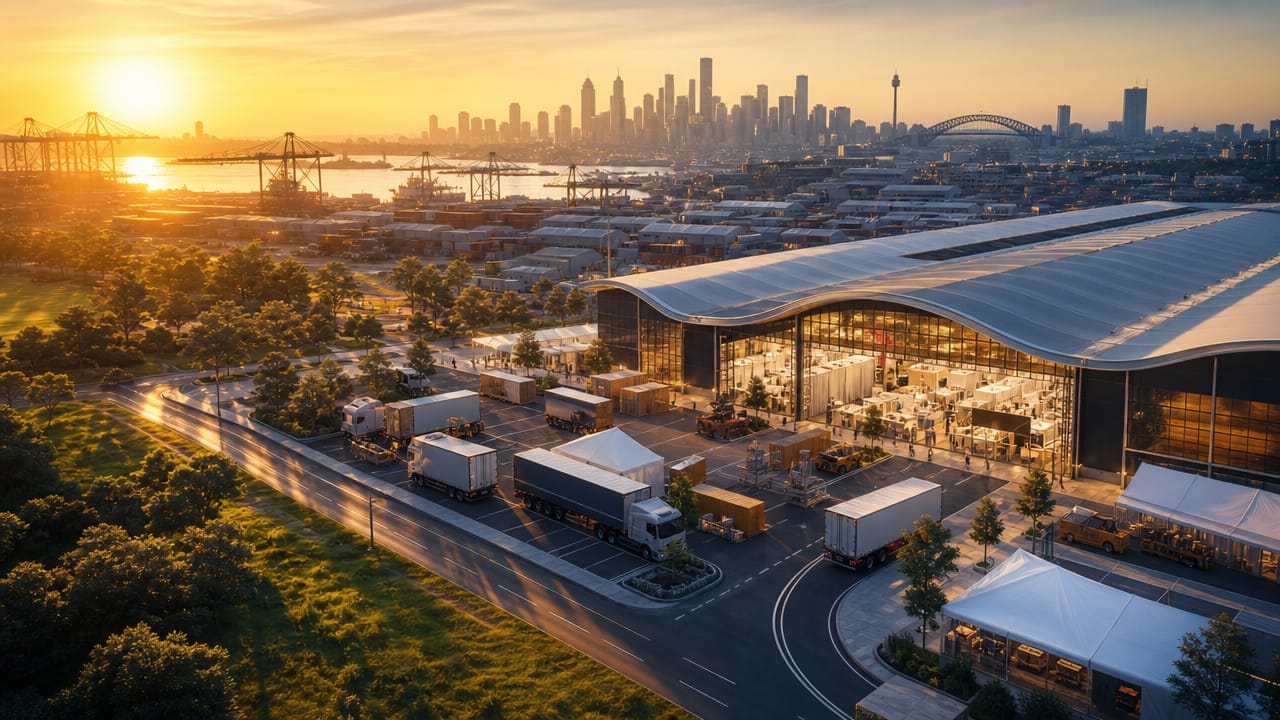



Understanding the Impact of Freight Delays on Exhibitors is now a core strategic issue for Australian brands that rely on trade shows and business events. With shipping disruption persisting and schedule reliability hovering around 50%, logistics risk can no longer be treated as an afterthought. For exhibitors working to immovable bump‑in windows and high‑stakes launches, freight performance directly shapes brand perception, sales pipeline, and overall event ROI.
In this climate, the real competitive edge comes from how intelligently teams anticipate, price, and manage logistics risk across their exhibition calendar.
For Australian exhibitors, distance magnifies every disruption. Ocean and air capacity constraints, industrial action, and port congestion mean exhibition freight is exposed to longer lead times and more touchpoints. A delay of even 24 hours can push bump‑in beyond venue access windows, forcing rushed builds or incomplete stands. This does more than inconvenience marketers; it dilutes campaign impact, reduces lead capture, and undermines the credibility of brands seeking to signal reliability and scale.
Too many budgets still assume freight is a fixed, tactical line item rather than a variable strategic lever. Exhibition Logistics and Freight decisions influence everything from stand design and material choices to the need for time-critical trade show freight when things slip. When delays trigger overtime labour, emergency air uplift, or on‑site rework, margins erode quickly. Progressive teams are now modelling total cost of exhibiting, including probable disruption scenarios, instead of relying on headline freight quotes alone.
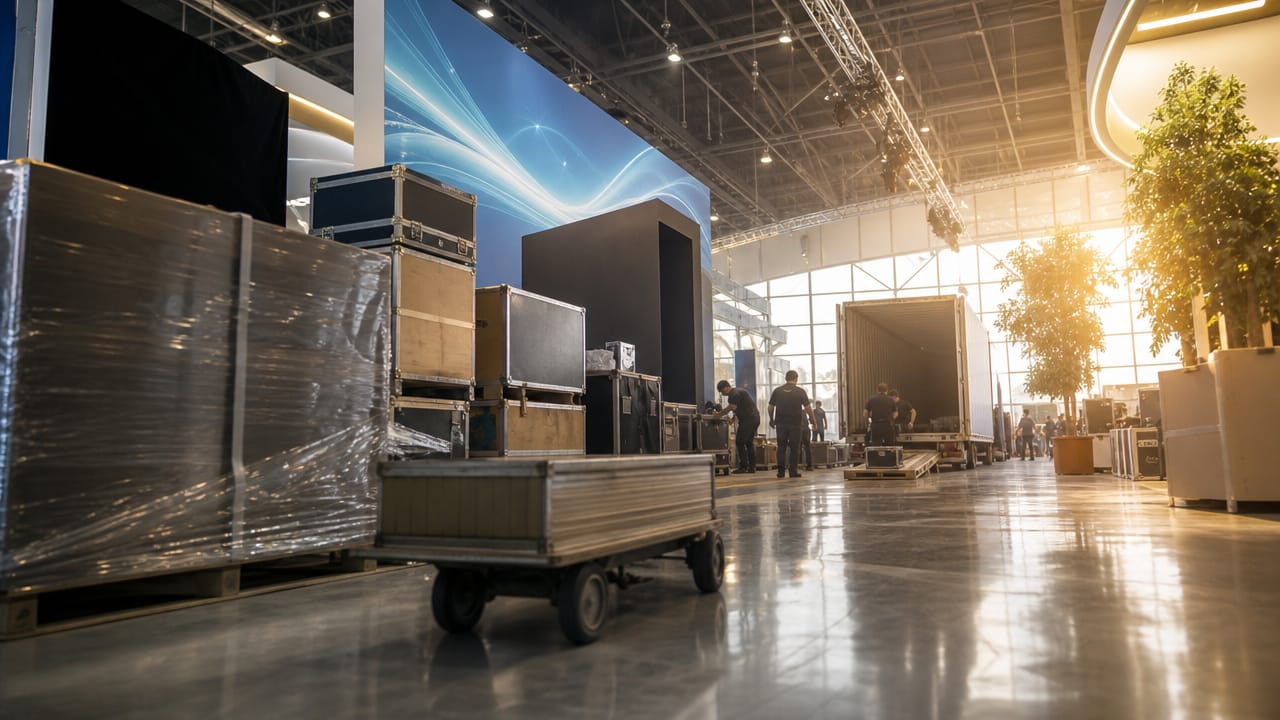
The most visible pain points often emerge at the venue, where tight loading dock schedules and safety rules collide with late shipments. Missed slots can cascade into rescheduling trade show logistics, extending AV and furniture hire, and negotiating penalties for missed exhibition freight deadlines with organisers. Teams frequently underestimate the complexity of last-mile delivery to exhibition venues, particularly when multiple contractors, customs‑cleared cargo, and venue marshals must be coordinated within a few compressed hours.
Forward‑looking marketers are rethinking stand concepts and timelines to build resilience into their trade show logistics. Modular designs, lighter materials, and local sourcing options provide more agility when managing delayed exhibition freight that arrives in stages rather than all at once. Some Australian brands now maintain playbooks for exhibition transport contingency planning, including alternate suppliers for critical demo units and graphics. Others are revising contracts so partners share accountability for interstate trade show freight delays and coordinating return freight after exhibitions.
Ultimately, the exhibitors that will win in this environment are those that treat logistics as a strategic discipline, not a back‑office chore. By stress‑testing timelines, insisting on clear escalation paths for exhibition transport issues, and building realistic buffers into budgets, leaders convert volatility into an advantage. If your organisation has not recently reviewed its approach to exhibition freight, now is the time to benchmark current practice, engage specialist advisors, and recalibrate your event program before the next disruption hits.
Input your search keywords and press Enter.