



Balancing quality and cost in exhibition stand choices is now a strategic decision for Australian marketers, not a last‑minute procurement task. As expectations for immersive brand experiences increase, Exhibition Stand Costs for small to mid-sized spaces regularly reach five figures once all on-site services are included. The organisations that win aren’t the ones who simply spend more, but those who deliberately align every design and cost choice to pipeline impact, customer experience and multi-year brand objectives.
The real shift is from asking ‘How much does the stand cost?’ to ‘Which investments reliably change visitor behaviour and commercial outcomes?’
Effective exhibition stand pricing starts with the full program, not a single event. Floor space, rigging, logistics and labour can add significantly to the headline fabrication number, so leaders need a disciplined exhibition stand cost breakdown before signing off any design. Treating the stand as a reusable asset over two or three years reframes the economics; higher upfront quality often becomes cheaper per show when reconfiguration and storage are planned from day one.
Modular systems have matured to the point where many visitors can’t easily distinguish them from bespoke builds. For marketers focused on managing exhibition stand expenses across a full calendar, modular backbones with fabric graphics create a dependable, rebrandable platform. Where deeper theatre or storytelling is required, budgeting for custom stands around key hero zones – a central demo stage or hospitality area – allows brands to dial up impact without accepting a fully custom price tag at every event.
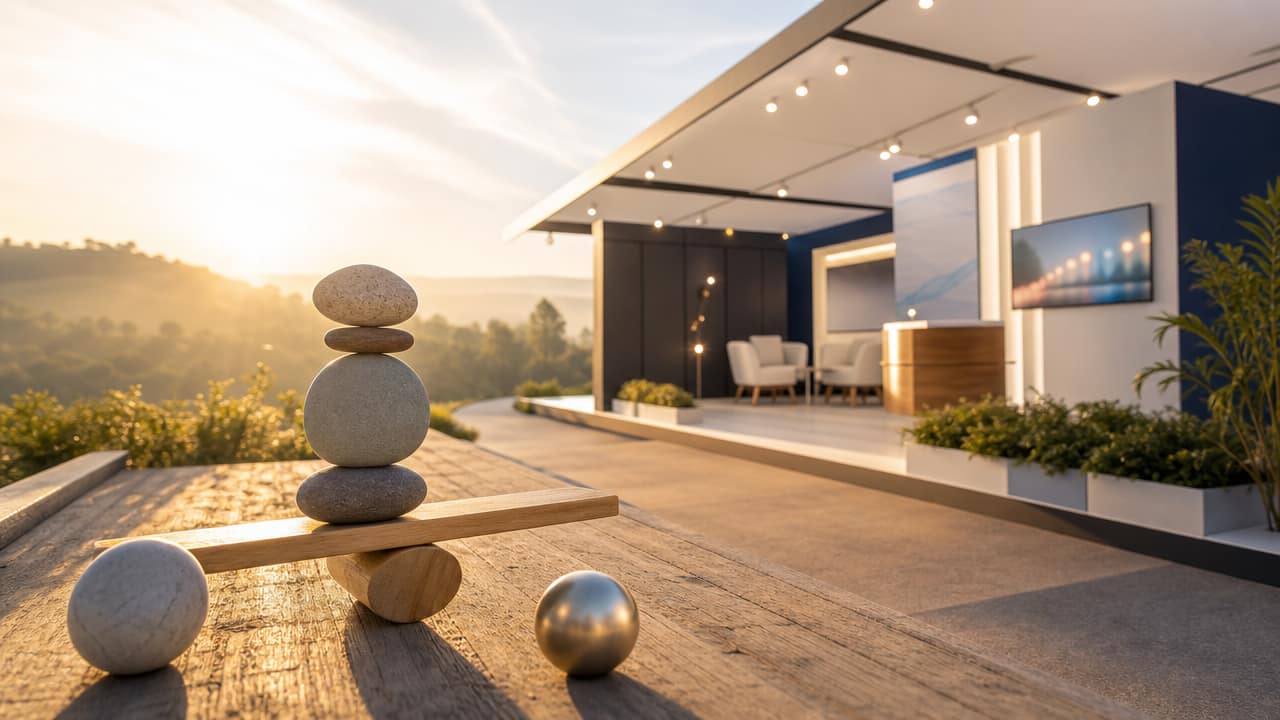
The data from high-performing teams is consistent: spatial flow, lighting and focused messaging deliver outsized returns compared with their cost. Intelligent layouts improve staff utilisation and reduce congestion, while considered lighting can make even modest architecture feel premium. In contrast, overspecified joinery or complex AV often looks impressive in exhibition stand quotes but underperforms on show day. Leaders should rigorously evaluate stand quote inclusions against clear KPIs, using trade show cost planning frameworks that link design features to measurable conversion behaviours.
Governance is now the differentiator in a tightening trade show budget. Marketers who compare exhibition stand quotes using standardised ROI assumptions gain a sharper view of value, not just price. By codifying trade show budgeting tips, conducting post-show reviews and controlling exhibition build costs through preferred partners, they turn each event into a live experiment. Over time, this discipline reveals which design investments deserve to be scaled and which should be simplified or cut entirely.
To stay competitive, marketing leaders should revisit their events roadmap, clarify success metrics and operationalise a consistent process for balancing quality and cost in exhibition stand choices. Use the next planning cycle to benchmark current performance, reset assumptions about where spend truly moves the needle, and brief suppliers with a multi-year lens. If you’re unsure where to start, convene a cross-functional review of your last three events and map design decisions directly against pipeline, meetings and long-term relationship outcomes.
Call to action: Review your last three exhibitions and identify which stand elements genuinely drove conversations and conversions. Then, speak with a specialist to redesign your next stand around those proven value drivers while rationalising costs elsewhere.
Input your search keywords and press Enter.