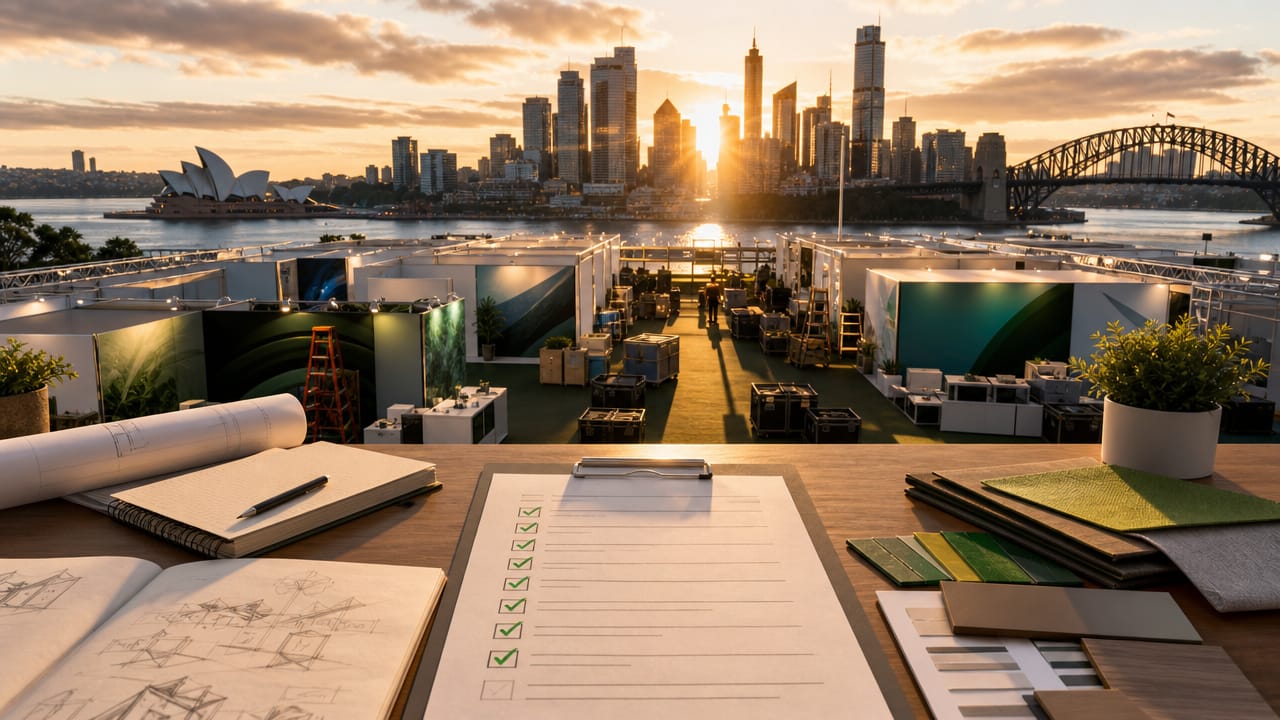



The Strategic Power of Pre-Show Checklists is rapidly becoming a defining factor in exhibition performance across Australia. As venues in Sydney, Melbourne and Brisbane return to pre-2017 volumes, a structured exhibition planning checklist is no longer a nice-to-have; it is a commercial safeguard. Exhibitors that invest in disciplined pre-show exhibition planning consistently report clearer objectives, calmer teams, and stronger conversion from conversations to qualified pipeline.
In a crowded Australian exhibition calendar, preparation is not admin; it is a strategic differentiator that determines whether your stand becomes a cost centre or a revenue engine.
Record participation at events like AIME, Integrate and Land Forces is intensifying competition for buyer attention. In this environment, relying on ad hoc trade show preparation exposes brands to cost blowouts, compliance risks and missed opportunities with priority accounts. A well-governed checklist turns complexity into a repeatable system, linking commercial goals to stand design, buyer outreach, staffing, and post-show follow-up in one coherent framework.
Australian trade show prep has unique considerations, from WHS obligations and union regulations to venue-specific sustainability rules. A tailored trade show stand checklist ensures nothing critical is left to memory, especially when multiple suppliers and internal stakeholders are involved. High-performing exhibitors treat their checklist as a governance tool, aligning sales, marketing, operations and finance around agreed targets, budgets and an accountable exhibitor responsibilities list.
Most downloadable templates fail because they ignore sector nuance, deal value and audience maturity. Leading teams evolve their checklist into a living pre-event planning guide that changes with each show’s commercial stakes. For example, an engineering firm at Australian Manufacturing Week may prioritise technical demonstrations, data capture and the exhibition stand briefing process over promotional merchandise, informed by an honest review of common pre-show planning mistakes from prior events.
The real advantage appears when your Exhibition Stand Planning, messaging and measurement are integrated into a single exhibition planning timeline. Mapping an exhibitor preparation timeline against freight cut-offs, stand build, pre-booked meetings and post-show nurture creates operational rhythm and reduces stress on delivery teams. Embedding a rigorous trade show preparation framework also makes it easier to onboard new staff, set expectations with partners, and continuously refine your approach using real event data.
To lift performance, audit your current pre-show exhibition planning against the last three events and quantify where value leaked: unqualified leads, poorly briefed staff, or slow follow-up. Convert each issue into a concrete action on your next exhibition planning checklist and assign clear ownership and deadlines. If you need a more robust structure, start by aligning your checklist with a documented exhibitor responsibilities list and a show-specific exhibition planning timeline that senior leadership endorses.
Exhibitors serious about long-term returns treat every show as a controlled experiment, not a one-off appearance. Use your next event to test a sharper message, refine your exhibitor preparation timeline, and tighten the link between stand engagement and post-show revenue. Now is the ideal time to review your current checklist, stress-test it against your upcoming calendar, and speak with an exhibition specialist to turn your stand program into a predictable growth engine.
Input your search keywords and press Enter.