



How to Handle Storage Needs for Trade Show Materials
For many Australian exhibitors, storage for trade show materials only becomes visible when something goes wrong. Stands emerge from crates with missing pieces, graphics arrive creased, or key components are still sitting in a warehouse on the other side of the country. These issues are rarely bad luck; they stem from weak systems around Exhibition Logistics and Freight that turn every event into a last‑minute scramble. Over time, this reactive approach erodes budgets, schedules, and team confidence in the overall events program.
When storage is treated as an afterthought, the financial impact quickly mounts. Replacing damaged panels, lighting, or flooring at short notice is far more expensive than protecting them properly between events. Display assets can represent a significant share of annual exhibition spend, yet are often stored in garages, corridors, or generic units with no climate control. In these conditions, moisture, dust, and physical knocks become routine. Weakened packaging also drives up exhibition freight risks, as poorly protected items are more likely to fail in transit.
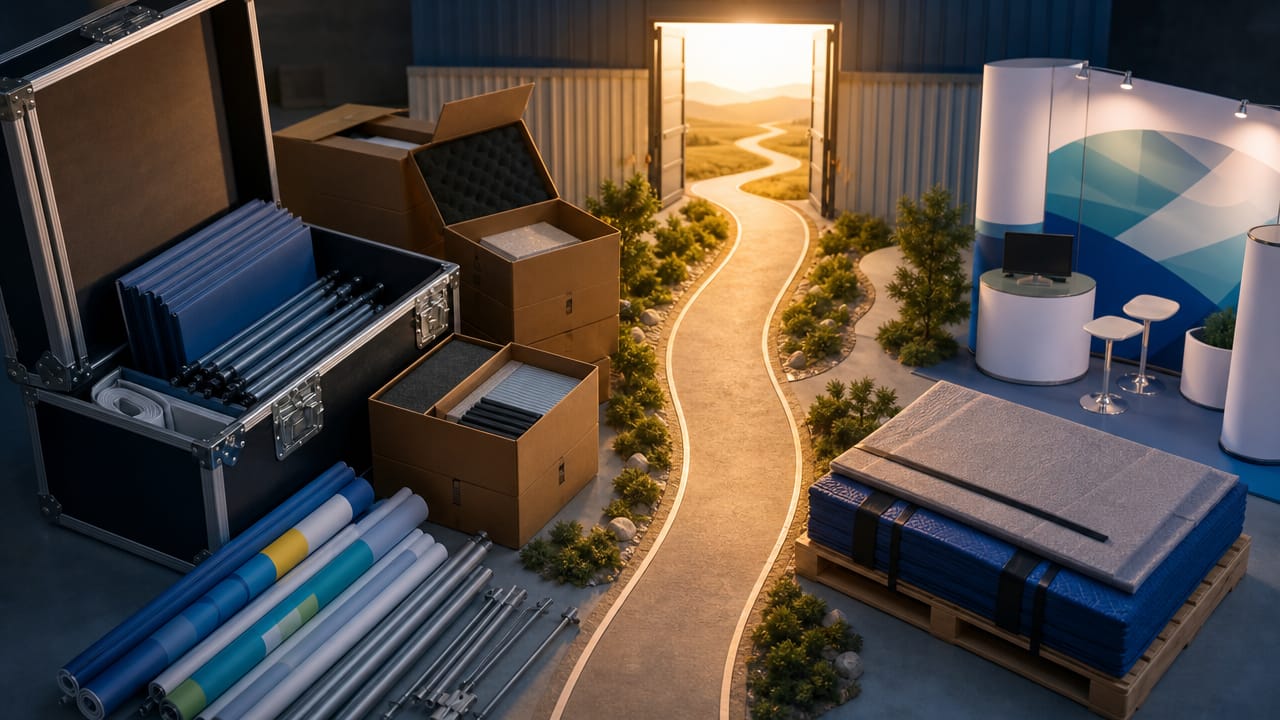
The earliest red flags usually show up during planning and bump‑in. Teams spend hours hunting for complete kits, only to realise a key bracket or cable was never returned after the last show. Freight paperwork lives across multiple inboxes, so no one is sure which version of the stand travelled where. At the venue, crews open half the cartons just to find one item because labelling is vague or outdated. Frequent reliance on urgent couriers, oversized airline luggage, or ad‑hoc exhibition transport is another sign the system is failing.
Several structural issues sit behind these symptoms. Storage is commonly fragmented across different offices, with no central inventory or event freight planning checklist to guide decisions. Original packaging supplied by stand builders is reused for years, long after it stops offering real protection. Late event confirmations compress timelines, making it harder to consolidate exhibition freight or compare interstate exhibition transport options properly. Logistics responsibility often falls to already stretched marketers with limited time to manage coordinating exhibition freight suppliers or checking venue loading dock access tips.
Ignoring these weaknesses doesn’t just create stress; it undermines the reliability of your whole trade show logistics strategy. Poorly packed crates slow down bump‑in, increase the risk of on‑site assembly errors, and reduce the lifespan of expensive assets. Without secure stand storage between shows, exhibitors struggle to plan national or international calendars with confidence. Over multiple events, the hidden cost of replacement gear, emergency hires, and inefficient return freight and dismantling logistics can easily outweigh the investment needed for professional trade show storage solutions.
To get ahead of the problem, start with a straightforward audit of your current setup. Document where each asset lives, how it is packed, and who is accountable for its condition after each show. Note recurring damage, track how often you resort to short‑notice exhibition transport, and capture photos of crates and cases. If the same issues appear across more than one event, it’s a sign to rethink storage as part of your broader exhibition strategy and consider speaking with an expert in exhibition freight and storage before your next show cycle.
Input your search keywords and press Enter.