



Recognising the hidden risks in packing for Australian exhibitions is essential for any brand investing heavily in stand design and presentation. In a country defined by long distances, strict quarantine controls and tight event schedules, even minor packing errors can ripple through your entire Exhibition Logistics and Freight plan. When crates, cases and cartons are not fit for purpose, no amount of careful trucking or airport handling can fully protect delicate displays, custom joinery and sensitive AV equipment.
Exhibition timelines in Australia leave almost no margin for error, with bump-in windows often compressed into a few critical hours. A cracked lightbox, missing plinth or damaged monitor on arrival can instantly downgrade your brand presence and reduce visitor dwell time. Beyond the visual impact, non-compliant materials or dirty cases can trigger quarantine inspections, adding days of delay and unexpected costs to your exhibition freight budget.
Many marketing teams overestimate what cardboard cartons and original product boxes can tolerate during repeated exhibition transport. Overloaded boxes split on busy loading docks, while unprotected corners of cabinetry chip after a single hard brake in a truck. Another frequent issue is mixing fragile graphics, hardware and screens in one unsegmented case, which turns every transit leg into a risk for scuffed fabrics, bent frames and cracked acrylics despite following standard packing tips for exhibition freight.
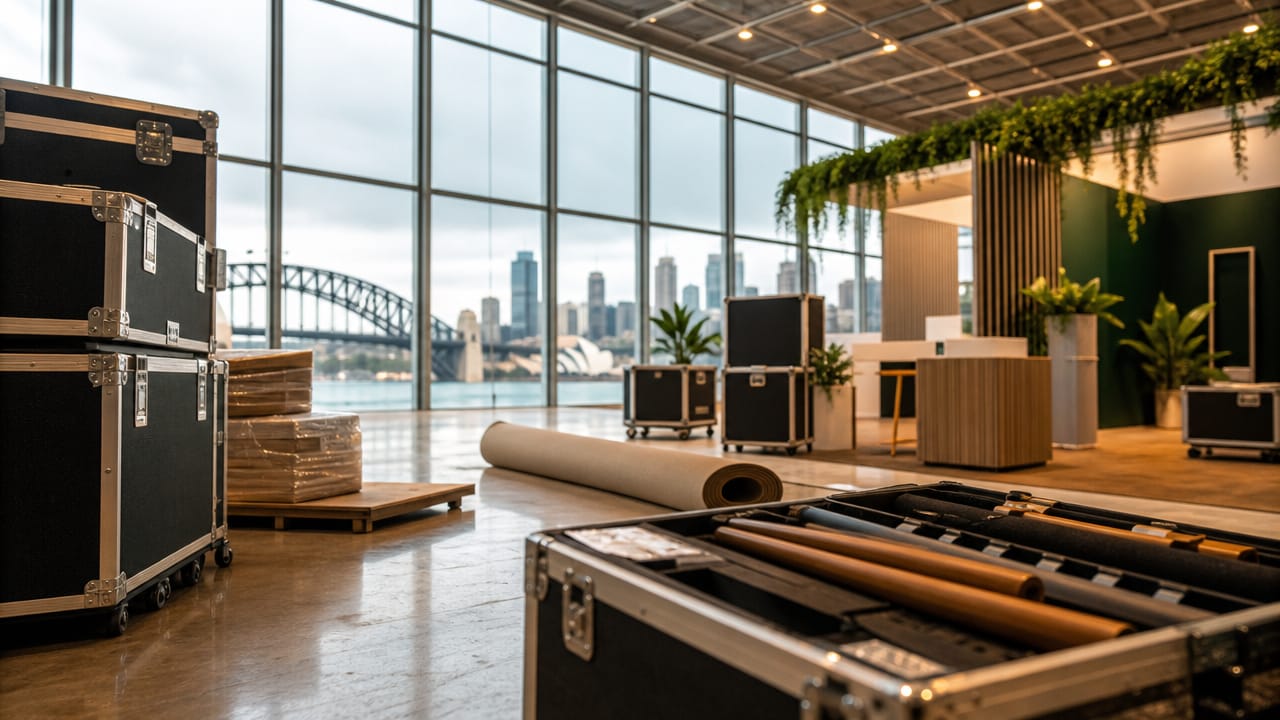
Red flags often emerge on the office floor before freight is even collected. Last-minute repacking, handwritten labels and colleagues guessing which case holds cables or tools all point to a weak system. Regularly replacing bent brackets, chipped plinths or creased fabric graphics is another signal that your packing is eroding ROI. If your team must phone someone offsite during bump-in to locate items, your current approach is adding friction to trade show logistics and eating into valuable set-up time.
Well-structured packing directly supports smoother Exhibition Logistics and Freight by reducing touchpoints where things can go wrong. Professional-grade cases, labelled modules and compliant pallets help carriers coordinate exhibition freight deadlines and move your stand efficiently through warehouses, airports and venues. In the Australian context, modular road cases and clear documentation simplify australian trade show freight planning, short term exhibition storage solutions and return transport for trade show displays across multiple cities.
For high-value, custom or frequently travelling stands, relying solely on in-house trial and error can be risky. An expert audit of your packing system can highlight opportunities to streamline case layouts, specify better materials and align with an interstate trade show logistics guide tailored to local conditions. Before your next event, review how you pack, move and unpack your display, and speak with a specialist in exhibition transport to identify vulnerabilities. Taking informed action now can prevent costly damage, delays and missed opportunities on the show floor.
Input your search keywords and press Enter.


